Best Vegetation Control Methods for Oklahoma Land
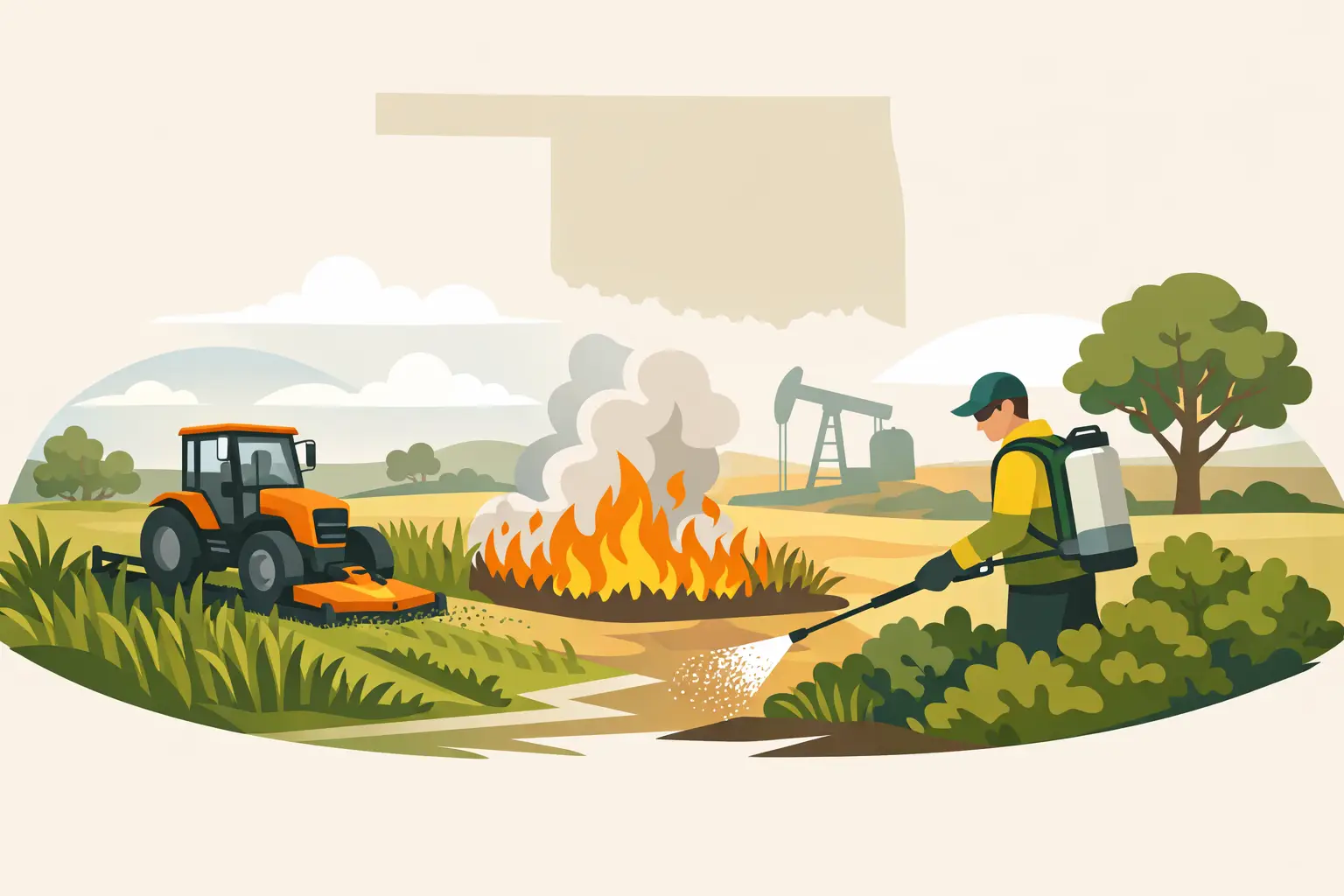
A property can look manageable from the road and still be difficult to use once you step into it. Cedar thickets close off trails, brush hides fence lines, tall grass raises fire concerns, and volunteer trees take over areas meant for pasture or a future build site. The best vegetation control methods are the ones that solve the actual problem on your land without creating a bigger cleanup, erosion, or maintenance issue later.
For Oklahoma landowners, the right approach depends on what is growing, how dense it is, the terrain, soil conditions, intended use, and how long it has been since the property was maintained. A clean-looking result matters, but so does preserving usable ground, keeping access open, and setting up a realistic plan for the next growing season.
Start With the End Use of the Property
Vegetation control should begin with a clear purpose. A homeowner clearing a backyard edge has different needs than a ranch operator reclaiming pasture, a builder preparing an access route, or an acreage owner reducing fuel near a home or outbuilding.
If the goal is improved access, the work may focus on opening driveways, trails, gates, fence rows, pond banks, and utility routes. For pasture improvement, the priority is usually removing invasive brush and volunteer trees while protecting the grass cover that supports grazing. A construction site may require selective clearing, grading preparation, and room for equipment to move safely.
Removing every plant is rarely the best answer. Mature shade trees, healthy native cover, windbreaks, and stable ground cover can all serve a purpose. A site assessment helps identify what should stay, what should go, and where a lighter touch will deliver better long-term results.
Forestry Mulching for Dense Brush and Small Trees
Forestry mulching is often one of the best vegetation control methods for overgrown Oklahoma acreage. A mulching machine cuts and processes brush, saplings, small trees, and many cedar stands into a layer of mulch that stays on the ground. Rather than piling debris for burning or hauling it away, the material is spread across the work area.
That mulch can help hold moisture, reduce exposed soil, limit erosion, and slow some new weed growth. It also leaves the property easier to walk, mow, inspect, and maintain. This is especially useful on rural lots, recreational land, overgrown homesites, trail systems, and pasture edges where heavy brush has made the property hard to access.
Forestry mulching is not a one-pass permanent cure for every plant. Some aggressive species can resprout, and established seed banks can continue producing new growth after clearing. The method works best when paired with follow-up mowing, selective treatment where appropriate, and regular inspections. It is also not the right choice when large trees need to be removed with their root systems or when a site needs major earthmoving before construction.
Bush Hogging for Grass, Weeds, and Light Brush
Bush hogging is a practical maintenance method for tall grass, weeds, light brush, and fields that have gotten ahead of their normal mowing schedule. It is often the right tool for maintaining a pasture, reclaiming a neglected lot with mostly soft vegetation, or keeping a cleared property from becoming overgrown again.
Regular mowing limits the chance for many weeds and brush species to mature and spread seed. It also keeps sight lines open around homes, barns, gates, and roads. On properties with fire concerns, reducing tall, dry grass can lower the amount of fuel available near structures and access points.
Mowing alone will not remove thick cedar, mature brush, or established small trees. Repeated cutting may suppress some woody plants, but it can also encourage certain species to branch out or resprout more aggressively. When brush is too heavy for a mower, start with selective clearing or forestry mulching, then use bush hogging as the ongoing maintenance step.
Targeted Clearing When Specific Areas Need to Open
Targeted clearing is the better choice when the job is not about treating an entire acreage the same way. Fence lines, creek crossings, building pads, utility paths, property boundaries, and storm-damaged areas often need focused work with careful equipment placement.
This approach gives property owners control over the scope. You can clear a route to a back pasture, reclaim room around a pond, remove brush from a planned shop site, or open visibility along a private drive while leaving desirable trees and screening intact. It is often more cost-effective than broad clearing when only certain areas are preventing the land from being usable.
The key is planning before equipment arrives. Mark boundaries, identify buried utilities where applicable, point out trees to protect, and discuss wet areas, drainage paths, septic components, and fencing. Clear communication prevents avoidable damage and helps the operator match the work to the property’s actual needs.
Grazing Can Help, but It Is Not a Standalone Fix
Managed grazing can be useful for controlling grass and some broadleaf vegetation. Cattle, goats, and other livestock may help maintain open areas after initial cleanup, particularly on agricultural properties with a sound fencing and water plan. Goats can browse certain brushy plants that cattle tend to avoid, while cattle are better suited to grass-heavy areas.
However, grazing has limits. Livestock will not reliably eliminate established cedar, dense woody stems, or every invasive plant. Overstocking can damage desirable forage, compact soil, and leave bare ground exposed. Grazing works best as part of a land-management plan, not as a substitute for clearing land that has already become heavily overgrown.
Herbicide Treatment Has a Place in Selective Control
Targeted herbicide applications can be effective for invasive weeds, resprouting brush, and problem plants that mechanical work does not fully eliminate. Depending on the vegetation, treatment may be applied to foliage, cut stumps, or individual stems. This can reduce regrowth without spraying an entire property unnecessarily.
The trade-off is timing and precision. The wrong product, wrong application rate, or poor weather conditions can harm desirable vegetation and waste money. Treatment near ponds, drainage areas, gardens, livestock, or neighboring property requires added care. For many property owners, herbicide is most useful after mechanical clearing has made the target plants accessible and easy to identify.
Controlled Burning Requires Experience and the Right Conditions
Prescribed fire can reduce accumulated grass, brush, and certain unwanted plants under carefully planned conditions. It has long been part of land stewardship in appropriate settings, especially where fire-adapted grasslands need periodic renewal.
But controlled burning is not a casual weekend project. Wind, humidity, fuel load, burn breaks, nearby structures, smoke, local restrictions, and emergency response access all matter. In many residential and rural areas, the risk and preparation requirements make other methods more practical. When fire is considered, it should be planned and carried out by qualified professionals who understand local conditions and safety procedures.
Build a Maintenance Plan Before the Work Is Finished
The most common mistake in vegetation control is waiting until the property is overgrown again. Once brush is removed and access is restored, maintenance becomes simpler and less expensive. The right schedule depends on rainfall, soil, plant types, grazing pressure, and how the land is used, but most properties benefit from regular observation rather than a wait-and-see approach.
Walk the cleared areas after major weather events and during peak growing months. Watch for cedar seedlings, brush resprouts, invasive weeds, washouts, fallen limbs, and spots where mowing equipment cannot reach. Early action on a small problem is usually far easier than another full clearing project.
For landowners around Choctaw, Oklahoma City, Tulsa, Norman, and Edmond, a dependable contractor can help turn a one-time cleanup into a workable plan for access, pasture use, safety, and future improvements. All Star Forestry Mulching approaches each property with that practical goal in mind: use the right equipment, protect what matters, and leave the ground ready for its next purpose.
The best time to make a plan is when the brush is still a manageable problem, not when it has taken away access to the parts of your property you need most.