How to Clear Trails on Property Without Overclearing
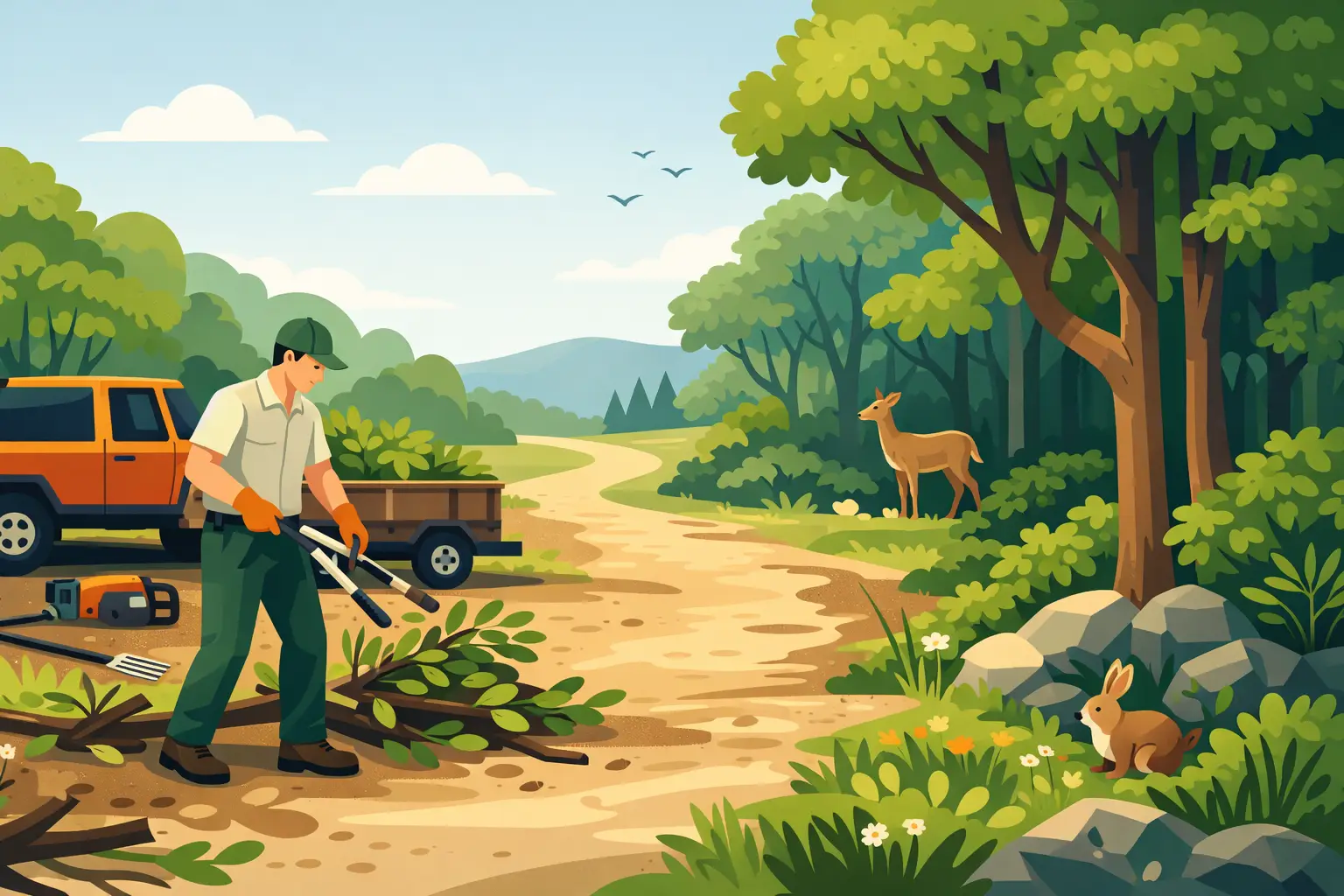
A trail that disappears into cedar, briars, and low-hanging limbs is more than an inconvenience. It can keep you from checking fences, reaching a pond, moving equipment, or getting emergency access where it is needed. The right way to clear trails on property is not to strip every tree and scrape bare dirt. It is to create dependable access while protecting the land that makes your property worth owning.
For Oklahoma acreage, trail work often has to account for rocky ground, fast-growing brush, soft drainage areas, rolling terrain, and mature trees worth keeping. A good plan starts with how you will use the trail, then matches the clearing method to the conditions on the ground.
Start With the Job the Trail Needs to Do
Not every trail needs the same width, surface, or level of clearing. A walking trail through the woods can stay narrow and shaded. A route for a side-by-side, compact tractor, trailer, or skid steer needs more room to turn, pass limbs, and handle uneven terrain. If the trail may be used for fence work, livestock checks, storm cleanup, hunting access, or fire response, consistent clearance matters even more.
Before any vegetation comes down, walk the proposed route and look for the practical issues. Mark the start and end points, creek crossings, steep spots, gates, utility lines, old fencing, and trees you want protected. A trail that follows the easiest visible opening may not be the best long-term route. It could run straight through a wet area, cross a washout-prone slope, or create an awkward turn for equipment.
For many properties, it makes sense to use existing ranch roads, old logging paths, fence lines, and natural ridges as the backbone of the trail system. That approach usually reduces the amount of clearing required and helps the route fit the land instead of fighting it.
Clear Trails on Property With the Right Width
Too narrow, and the trail closes back in quickly or damages equipment as it passes through. Too wide, and you remove useful shade, privacy, wildlife cover, and tree root protection without gaining much function. The goal is workable clearance, not a highway through the woods.
A foot trail may only need enough room for safe passage and routine mowing. A UTV or ATV route needs wider side clearance so brush does not drag against riders or vehicles. Tractor and equipment trails require additional room for turns, implements, and overhead limbs. The final width depends on your equipment, the terrain, and whether the route needs to accommodate occasional emergency access.
Overhead clearance deserves the same attention as ground cover. Low limbs can break mirrors, catch trailers, and force drivers toward the edge of a trail. Dead or leaning limbs near a frequently used route should be evaluated for removal, especially after wind, ice, or storm damage. Keeping a safe travel corridor is different from removing every limb in sight.
Choose a Clearing Method That Fits the Ground
Forestry mulching is often a strong choice for wooded or heavily overgrown trails. A mulching machine can process brush, saplings, vines, and small trees into mulch at ground level, leaving a protective layer over the soil. That helps reduce exposed dirt, limits rutting, and avoids the burn piles and haul-off often associated with conventional clearing.
It is not the answer for every trail. If a route needs major grade changes, drainage structures, a rock base, or a new roadbed for heavy trucks, excavation and grading may be necessary. Mulching creates access and manages vegetation, but it does not replace road construction where a built road is needed.
Bush hogging works well where the route is already open enough and the problem is tall grass, weeds, and lighter regrowth. It is generally a maintenance tool, not the best first step for thick brush and young trees. In tight areas around homes, barns, fence lines, or specimen trees, tractor work and selective hand clearing may be the safer approach.
A site assessment should determine which method protects the property while delivering the access you need. The cheapest-looking option can become expensive if it leaves stumps in a travel lane, tears up wet ground, damages fences, or creates erosion issues that need correction later.
Protect Drainage, Soil, and the Trees You Want to Keep
Water is usually the deciding factor in trail durability. A route that stays dry after a normal rain will be easier to maintain than one placed in the lowest part of a draw. Where a trail must cross a drainage area, the work should preserve natural flow instead of blocking it with brush, loose soil, or poorly placed fill.
Avoid unnecessary clearing along creek banks, pond edges, and drainage channels. Vegetation in those areas helps hold soil in place. Clearing can still be done for access, but it should be selective and planned around the water path. The same care applies to slopes, where removing too much cover can send runoff down the new trail instead of across the ground.
Mature hardwoods and healthy shade trees also need room around their roots. Heavy equipment repeatedly turning at the base of a tree can compact soil and injure roots even if the trunk is never touched. A professional operator can work around retained trees, keep travel patterns controlled, and mulch unwanted growth without treating the whole area as disposable.
Build Safety Into the Route
A clear trail can improve day-to-day safety on rural property. It gives you a more reliable route to fences, outbuildings, livestock areas, and remote sections of acreage. It also reduces the chance of getting equipment hung up in brush, backing blindly around limbs, or walking through hidden holes and fallen wire.
Property owners should still confirm boundaries before clearing near property lines and identify buried or overhead utilities before equipment starts. Old barbed wire, pipe, abandoned structures, and concealed debris are common on rural land. They can damage equipment and create hazards for anyone using the trail afterward.
If your property has wildfire concerns, trail clearing can also support access for maintenance and response. That does not mean every trail becomes a firebreak. It means keeping key routes passable, removing hazardous brush where appropriate, and maintaining enough clearance to reach critical areas without delay.
Plan for Regrowth Before the Work Starts
No cleared trail stays clear on its own. Oklahoma vegetation does not need much encouragement, especially after spring rain. The best trail plan includes a realistic maintenance schedule based on sunlight, soil, grazing activity, and the type of vegetation removed.
Mulched trails often remain manageable because the mulch suppresses some immediate regrowth and makes the corridor easier to inspect. Still, sprouts, vines, grass, and low branches will return. A light annual or seasonal maintenance pass may be enough for a shaded recreational trail, while pasture access lanes and frequently traveled routes may need attention more often.
Watch for the early signs instead of waiting until the route is closed again. New cedar growth, thorny brush at turns, limbs dropping into the travel lane, and water beginning to channel down the trail are easier to address when they are small. Regular upkeep costs less and keeps the property usable year-round.
What a Well-Planned Trail Project Looks Like
A dependable trail project begins with a walk-through and a clear discussion of how the land will be used. From there, the scope should identify the route, intended width, vegetation to remove, trees to protect, access challenges, and any areas needing special care. You should know what equipment will be used, what the finished trail will look like, and whether follow-up maintenance is recommended.
At All Star Forestry Mulching, that means providing a clear, itemized estimate and a work plan built for the actual property, not a generic clearing package. The goal is to leave you with access that works for your equipment and respects the ground beneath it.
A properly cleared trail changes how you use your acreage. You can reach the back fence without a fight, check the property after a storm, maintain pasture edges, and enjoy more of the land you already own. Start with the route you need most, clear it with purpose, and maintain it before brush turns a useful path back into an obstacle.