A Construction Lot Clearing Example That Gets It Right
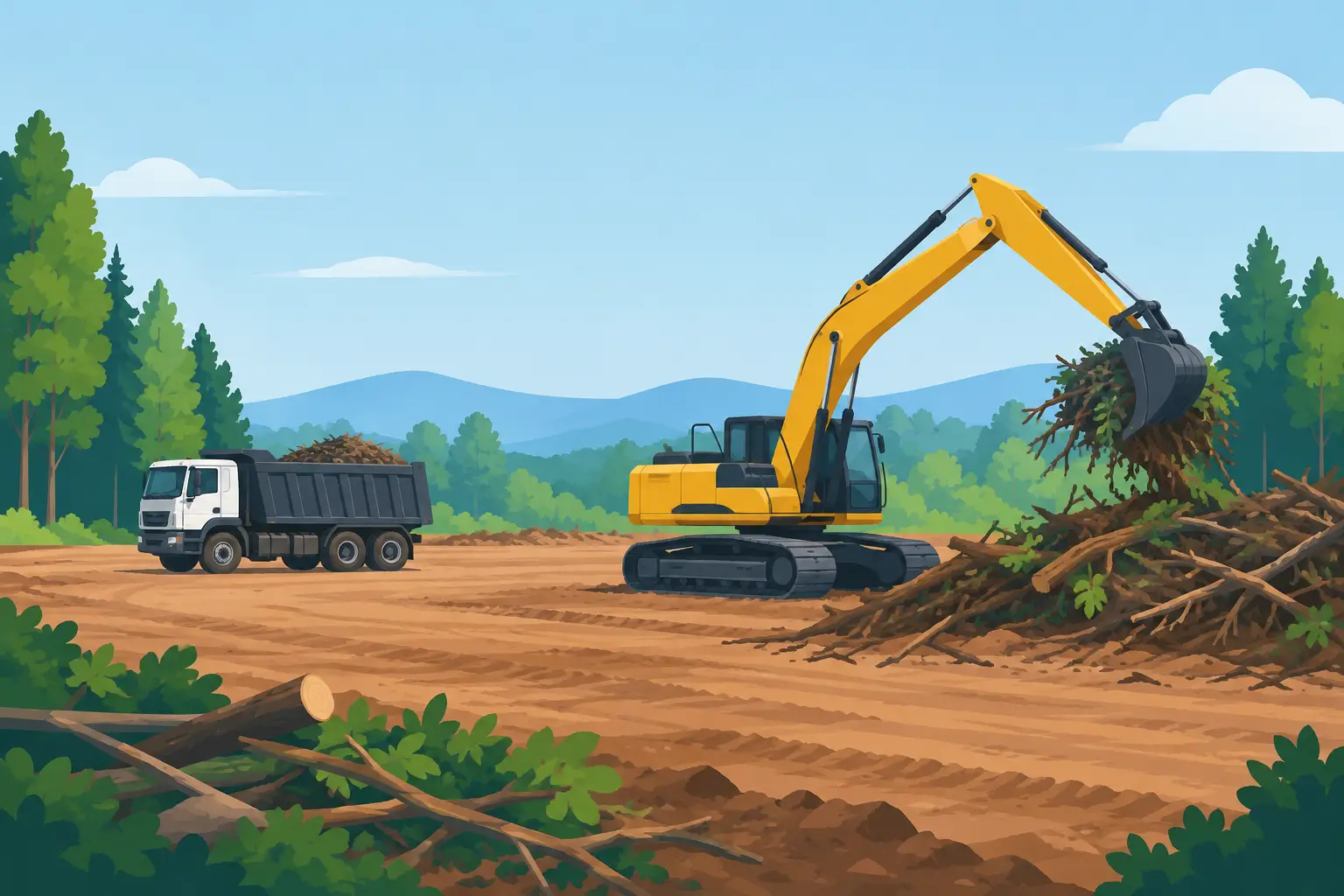
A build site can look like “just a few trees and some brush” until equipment needs a safe way in, a septic installer needs room to work, and the builder discovers that hidden stumps sit where the driveway is supposed to go. This construction lot clearing example shows how a practical clearing plan turns an overgrown Oklahoma parcel into a workable homesite without clearing more ground than the project requires.
The goal is not to leave bare dirt from fence line to fence line. The goal is to create dependable access, establish the building area, manage vegetation responsibly, and leave the owner with a site that is ready for the next trade.
The Property: An Overgrown Five-Acre Homesite
Consider a five-acre rural property outside Choctaw. The owner plans to build a single-family home with a gravel driveway, a shop building, and a septic system. About two acres are wooded with cedar, volunteer trees, briars, poison ivy, and thick undergrowth. The remaining acreage is mostly open but has grown up with waist-high grass, saplings, and scattered brush.
From the road, the site appears accessible. On closer inspection, the entrance is narrow, the old trail is rutted, and low limbs block delivery trucks. Several mature hardwoods provide good shade near the future home, but dense cedar has crowded their lower branches. A drainage swale runs along one side of the proposed driveway, and a utility easement crosses the front of the property.
That mix of conditions matters. A generic “clear it all” approach could damage trees worth keeping, create unnecessary erosion, or leave a mess for the builder to handle later. A site-conscious plan starts by identifying what needs to go, what needs to stay, and where heavy equipment must travel.
Construction Lot Clearing Example: The First Walkthrough
Before work begins, the contractor and property owner walk the site together. The owner marks the approximate home location, driveway route, shop pad, septic area, and any trees they want protected. If the owner has a survey, site plan, utility information, or septic layout, those documents help define the work area and avoid costly assumptions.
The contractor checks practical field conditions: slope, wet spots, drainage paths, access from the road, tree size, fence lines, overhead hazards, and the type of vegetation on site. This is also the time to discuss where mulch can remain, whether debris needs to be removed, and what the next contractor needs from the cleared area.
For this example, the work plan is divided into four sections:
- Establish a safe entrance and a 14-foot-wide equipment and delivery route.
- Clear brush, cedar, and small trees from the house pad, driveway, and shop area.
- Preserve selected hardwoods and a wooded buffer along the rear property line.
- Bush hog the open acreage so the owner can see, access, and maintain the rest of the property.
A clear, itemized estimate should match that plan. It should explain the acreage or work zones included, the type of vegetation being addressed, expected equipment, debris handling, and any work excluded from the scope. No surprise fees is not just a good phrase. It depends on defining the job correctly before machines arrive.
Choosing Forestry Mulching, Grubbing, or Both
Forestry mulching is often a strong fit for construction lot clearing when the primary issue is thick brush, cedars, small trees, and tangled understory. A mulching machine cuts and processes vegetation into mulch that is spread across the ground. That mulch can help reduce exposed soil, limit mud, and slow new weed growth while the project moves forward.
On this five-acre homesite, forestry mulching handles the access route, the open clearing around the home and shop areas, and the unwanted cedar outside the future building footprints. It gives the owner a clean, navigable property without burn piles, hauling every branch away, or leaving slash scattered across the site.
But mulching is not the whole answer for every construction project. Stumps and root balls may need to be removed in areas that will be excavated, graded, paved, or used for foundations. The final decision depends on the builder’s requirements, the engineer’s plans, and where utilities, septic lines, and structures will go.
For this example, the homeowner coordinates with the builder before clearing begins. Trees inside the exact house pad and driveway footprint are removed to the required depth. Outside those critical zones, the remaining cut vegetation is mulched in place. This approach controls cost and disturbance while still preparing the areas where construction needs a clean start.
Protecting the Parts of the Property That Add Value
Good lot clearing is selective. Mature oaks, pecans, and other desirable hardwoods can add shade, curb appeal, and long-term property value. They also need room around their trunks and roots. Packing equipment too close, cutting roots, or piling soil against the base of a tree can create problems that do not show up until months later.
In this example, the selected hardwoods are flagged before work starts. The operator keeps the clearing line outside their critical root areas when possible and removes competing cedar and underbrush carefully. The result is not a manicured park, but a healthier, more usable stand of trees that remains part of the future homesite.
Drainage gets the same attention. The existing swale is left open, and mulch is not piled where it could redirect water toward the future foundation. If the land is especially steep, heavily disturbed, or prone to runoff, more erosion control may be needed. Clearing should support the grading plan, not work against it.
What the Finished Site Looks Like
After the initial clearing, the road entrance is open and the access route is wide enough for the next crews. The house pad area is visible and free of brush, low limbs, and small trees. The proposed shop location is opened up, while the rear wooded buffer stays intact for privacy and wind protection.
The open pasture area is bush hogged, giving the owner a clear view of the property’s contours, fence condition, and drainage. This often reveals follow-up needs that were hidden by tall grass, such as old wire, rocks, low areas, or sections of fence needing repair.
The ground is not automatically ready for a foundation just because it looks clean. The builder may still need grading, compaction, pad preparation, utility trenching, septic installation, or driveway base work. That is why a final walkthrough matters. The owner, clearing contractor, and builder should be aligned on what is complete and what happens next.
Common Mistakes This Clearing Plan Avoids
The first mistake is clearing before the home, driveway, septic, and utility areas are identified. That can lead to paying twice when a contractor opens ground in the wrong place or leaves trees where the excavator needs to work.
The second is treating every tree as either fully protected or fully removable. Some trees are worth saving, but a mature tree directly over a future roofline or too close to a foundation can become a maintenance or safety concern. The best choice depends on placement, health, root spread, and the final building plan.
The third is assuming all debris should disappear from the property. Hauling debris away may be appropriate on tight lots, near finished neighborhoods, or where a builder requires it. On rural acreage, mulching vegetation in place can be faster, cleaner, and more cost-effective. It also avoids burn piles and keeps a protective layer on the soil.
Finally, property owners sometimes overlook future maintenance. A cleared lot can grow back quickly if edges, fence lines, and open pasture are ignored. A simple maintenance schedule for mowing, bush hogging, or touch-up mulching helps keep access open and reduces the chance that brush takes over again before construction is complete.
A Better Start for the Build Ahead
A construction lot clearing project works best when it is planned around the land and the build, not around a one-size-fits-all clearing method. All Star Forestry Mulching approaches each site with that practical mindset: assess the property, define the work clearly, protect what should remain, and complete the job safely and on time.
Before scheduling any clearing, walk your property with the future driveway, building footprint, drainage, utilities, and access in mind. A few marked boundaries and a clear plan can save trees, prevent rework, and give every contractor after you a safer place to do their job.