Forestry Mulching Versus Bulldozing Compared
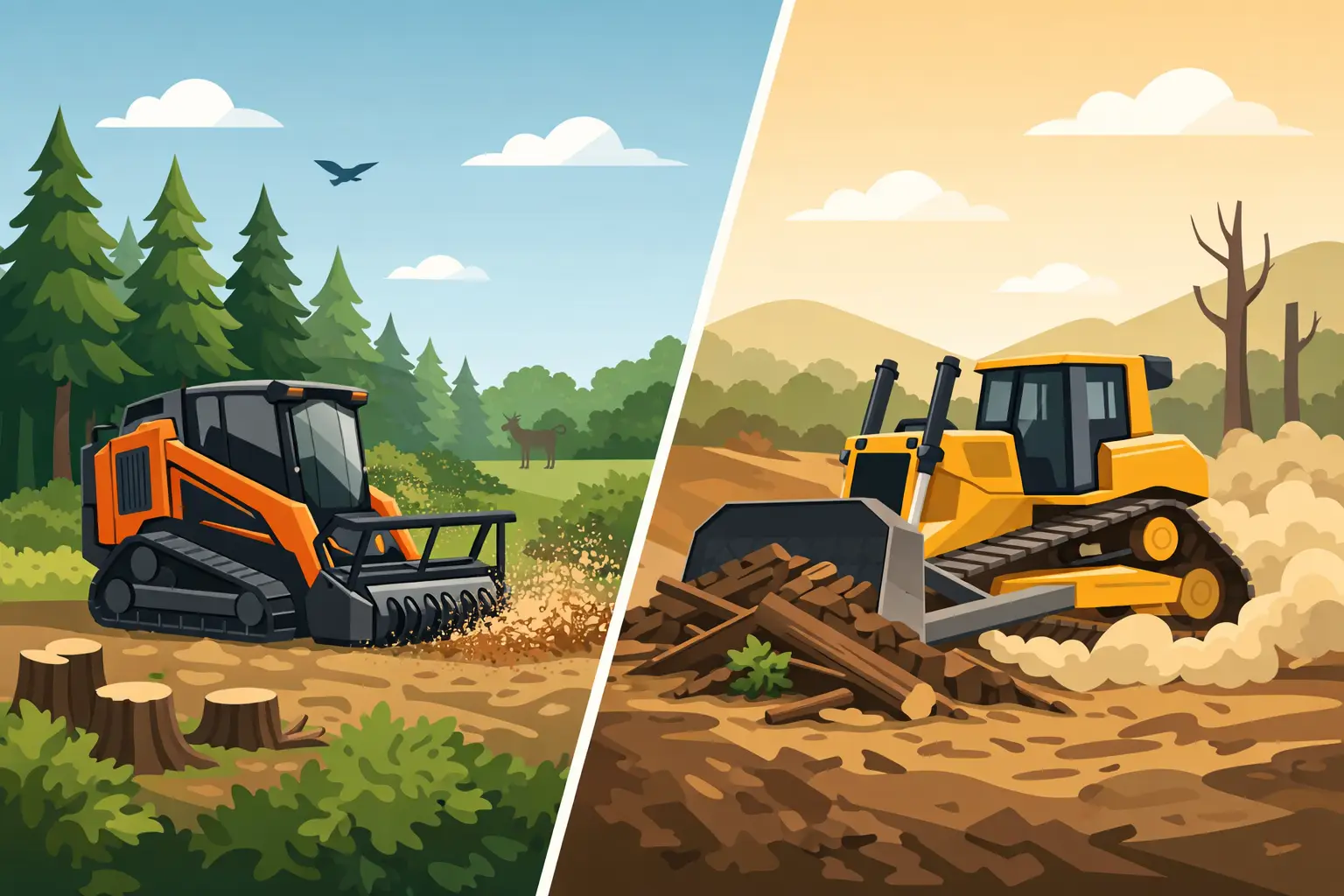
A dozer can make an overgrown property look cleared in a hurry, but what happens to the soil, roots, and debris after it leaves matters just as much. When comparing forestry mulching versus bulldozing, Oklahoma property owners should look beyond the first day of work and consider how they plan to use the land next season, next year, and years down the road.
The right method depends on the vegetation, slope, soil conditions, access, and end goal. A build site that needs grading is a different job from a wooded acreage that needs safe trails, a usable pasture edge, or improved access to a pond. Good land clearing starts with a clear plan, not a one-size-fits-all machine choice.
Forestry Mulching Versus Bulldozing: The Main Difference
Forestry mulching uses a tracked machine with a specialized mulching head to cut and grind brush, cedars, saplings, vines, and small-to-medium trees into wood chips. That material is spread across the ground as mulch rather than hauled away or burned. In many cases, the machine can work selectively, removing unwanted growth while leaving healthy trees, fence lines, and desirable vegetation in place.
Bulldozing uses a blade to push, scrape, uproot, and move material. It is designed for forceful earthmoving and is often the better tool when land must be reshaped, large stumps must be removed, or a site needs to be prepared for roads, pads, utilities, or major construction. However, it typically creates piles of brush, roots, and soil that require a second step: burning, hauling, grinding, or burying where allowed and appropriate.
Neither approach is automatically better. The question is whether your project calls for vegetation management or full-scale site alteration.
When Forestry Mulching Is the Better Fit
Forestry mulching is often a strong choice for rural properties around Choctaw, Oklahoma City, Tulsa, Norman, and Edmond where the goal is to reclaim usable ground without stripping the property bare. It works especially well for thick brush, invasive cedar, hedge, overgrown fence rows, trail corridors, hunting access, and pasture restoration.
The biggest advantage is that the mulch stays on site. A layer of processed vegetation can help protect exposed soil from hard rain, wind, and summer heat. On Oklahoma ground, where heavy rain can quickly cut ruts into bare slopes and red clay can become difficult to manage, keeping a protective cover in place is often practical land care.
Mulching also reduces cleanup. There are no large burn piles to manage and no need to haul off every branch and small tree. That can mean less disruption to the property, fewer truck trips, and a cleaner finish on projects where the customer wants the land accessible and maintained rather than excavated.
Selective clearing is another reason property owners choose this method. A skilled operator can work around mature hardwoods, leave shade trees, preserve visual buffers, and open up the land without removing every living thing. For a homeowner clearing a backyard edge or an acreage owner improving a trail system, that control makes a noticeable difference.
Forestry mulching has limits. It does not replace excavation when large trees, deep stumps, buried debris, or major grading are involved. It also does not permanently solve every regrowth issue. Because roots generally remain in the ground, some species can return. A follow-up maintenance plan, herbicide application where appropriate, or periodic bush hogging may be needed to keep the area open.
When Bulldozing Makes More Sense
Bulldozing is the practical choice when the job requires moving dirt as well as removing trees and brush. If a property owner needs a level building pad, a new driveway base, a pond repair, drainage changes, or a large area cleared down to rough grade, a dozer may be necessary.
It is also more effective for removing large stumps and root balls. That matters when a site will be used for construction, crop production, or other work that cannot tolerate hidden stumps below the surface. For a builder preparing a home site, leaving roots and woody material in place may create problems later. A dozer can remove those obstacles and give the next contractor a more workable starting point.
The trade-off is disturbance. Dozing can scrape away topsoil, compact the ground, and expose bare dirt. On sloped or drainage-sensitive areas, that increases erosion risk until the surface is stabilized. Pushed material must also go somewhere. Brush piles and root piles can become a major part of the project budget if disposal was not planned from the beginning.
A dozer is not a bad option because it moves soil. It is the right option when moving soil is part of the actual scope. Problems arise when it is used for a job that only needed brush removal and access improvement.
Cost Depends on More Than the Machine
Property owners often ask which option costs less. Forestry mulching can be more cost-effective for vegetation-heavy projects because cutting, processing, and dispersing the debris happen in one pass. There may be no pile burning, hauling, or separate debris contractor to schedule.
Bulldozing can carry additional costs after the clearing is done. Root removal, pile management, hauling, burning, finish grading, erosion control, and replacement of disturbed topsoil can all affect the final number. That does not mean mulching is always cheaper. Large timber, extensive stump removal, and construction-grade site preparation may justify the cost of dozing because they require work a mulcher cannot provide.
The most useful estimate is itemized and tied to the intended outcome. A clear scope should identify what vegetation will be removed, what stays, whether stumps are included, how debris will be handled, and whether follow-up grading or maintenance is needed. That approach prevents surprise fees and makes it easier to compare options fairly.
Think About What You Want the Property to Do
Before choosing a method, define the land's job. If you want to walk the acreage, maintain a fence line, reduce wildfire fuel, open a pasture edge, improve sight lines, or create access for equipment, forestry mulching may give you the cleanest path forward with less ground disturbance.
If you need to build a shop, install utilities, reshape drainage, establish a road, or remove large stumps before construction, bulldozing may be part of the plan. In many projects, the best answer is a combination: mulch the brush and smaller growth, then use targeted dozer or excavator work only where grading, stump removal, or earthmoving is truly required.
That combined approach can protect more soil while still getting the land ready for its next use. It also allows the contractor to focus heavy equipment work on the areas where it delivers real value instead of disturbing an entire tract unnecessarily.
Site Conditions Matter in Oklahoma
Wet ground, steep slopes, creek crossings, old fence wire, rock, and hidden trash all affect the work plan. A property that looks like simple brush from the road may have washouts, abandoned structures, utility easements, or soft spots that change the safe approach.
An on-site assessment is worth the time. It gives the operator a chance to identify access routes, mark trees to protect, inspect terrain, and discuss where the finished material should go. It also helps set a realistic schedule, especially after heavy rain or during periods when fire risk affects debris handling.
At All Star Forestry Mulching, the goal is not to send the biggest machine to every property. It is to provide a practical plan for safer access, cleaner ground, usable pasture, or a build-ready area, with clear expectations before work begins.
The best clearing decision is the one that leaves your property easier to use without creating avoidable work later. Start with the result you need, then choose the method that treats the land accordingly.