Mulching Versus Excavation for Oklahoma Land
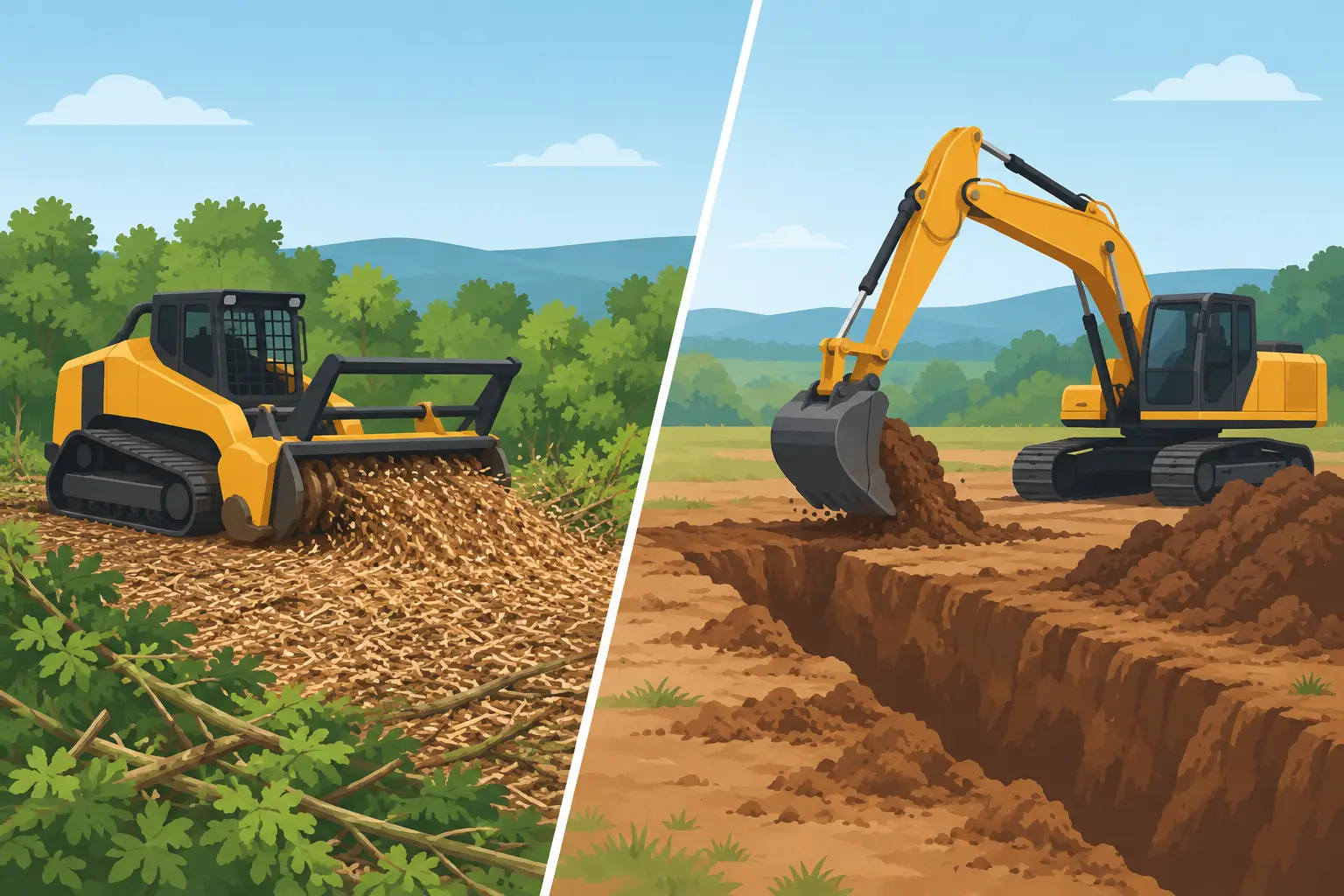
A cedar-choked fence line, an overgrown homesite, and a future driveway may all look like “clearing jobs” from the road. They are not. The right choice in mulching versus excavation comes down to what must happen after the brush is gone. Do you need usable pasture, better visibility, a clean trail, or a level pad for a building? Each goal calls for a different level of disturbance.
For many Oklahoma properties, forestry mulching handles the work efficiently while leaving the soil and root structure largely in place. Excavation earns its place when the land needs to be reshaped, stumps and roots must be removed, or construction requires a clean, graded surface. A good plan starts with the property’s next use, not with the biggest machine available.
Mulching Versus Excavation: The Main Difference
Forestry mulching cuts and processes brush, small trees, vines, and woody growth into a layer of mulch spread across the ground. The equipment works above the soil rather than digging into it. The finished area is generally passable, cleaner, and easier to maintain, but the tree roots and most stumps remain below grade.
Excavation uses heavy equipment to uproot vegetation, remove stumps, move soil, and change the shape of the ground. It can produce a more complete reset, especially where a structure, pond, road base, utility trench, or engineered drainage plan is involved. It also creates more material that may need to be piled, hauled off, burned where permitted, or otherwise managed.
Neither method is automatically better. Mulching is often the smarter choice for vegetation management. Excavation is often necessary for earthwork and full site preparation. The mistake is paying for excavation when only brush control is needed, or expecting mulching to solve a grading problem.
When Forestry Mulching Is the Better Fit
Mulching is a practical option when the land is overgrown but the existing ground grade works for the property’s intended use. It is commonly used to restore access roads, open hunting trails, reclaim pasture edges, clear around ponds, improve fence-line visibility, and reduce dense brush around homes or outbuildings.
Because mulch stays on site, it provides a protective ground cover. That layer can help slow erosion, reduce mud, hold moisture, and limit the immediate return of smaller weeds. On sloped ground or areas with loose Oklahoma soil, keeping the surface covered can be a real advantage after clearing.
Mulching also avoids the broad disturbance that comes with pulling roots and turning soil. That matters where landowners want to preserve mature shade trees, minimize damage around a creek area, or keep the property from looking stripped bare after the work is complete. A skilled operator can selectively remove undesirable brush while working around trees worth keeping.
It is also often the cleaner choice for projects where debris disposal would add unnecessary cost. Instead of leaving burn piles or windrows across the property, the vegetation is processed where it stands. The result is not a finish-grade construction pad, but it is a manageable surface that can be maintained with mowing, bush hogging, or periodic follow-up mulching.
There are limits. Large hardwood stumps, deep root balls, heavy rock, buried debris, and vegetation growing directly against structures may require a different approach. Mulching does not remove every root from the ground, and it does not create level ground where there was none.
Good candidates for mulching
Forestry mulching usually makes sense for cedar removal, underbrush, overgrown lot cleanup, trail creation, fence-line clearing, pasture reclamation, and defensible-space work around buildings. It is especially useful when the property needs access and visibility without major changes to drainage or grade.
For landowners planning future improvements, mulching can also be a first phase. Clearing the brush exposes the actual lay of the land, existing drainage paths, rock, old fencing, and problem areas before a builder or excavator makes larger site decisions.
When Excavation Is Worth the Added Disturbance
Excavation is the right tool when vegetation removal is only part of the job. If a homesite needs to be leveled, a driveway needs base material and compaction, drainage needs to be redirected, or a building pad requires roots and organic material removed, the work has moved beyond mulching.
A stump-free finish is another common reason to excavate. Roots and stumps can interfere with foundations, utilities, septic systems, road construction, and certain types of agricultural improvements. Pulling them out may be necessary, but it leaves holes, disturbed soil, and debris that must be addressed correctly.
Excavation may also be needed after storm damage when uprooted trees, damaged structures, or large debris cannot be safely processed in place. In those cases, the priority is controlled removal, safe access for equipment, and a plan for disposal. Firefighter-rooted safety standards matter most when damaged limbs, unstable trees, power lines, or obstructed emergency access are part of the picture.
The trade-off is cost and site impact. Digging, hauling, grading, and disposal take more time and equipment than surface vegetation management. Bare soil can erode quickly in heavy rain, particularly if the site is not graded and stabilized as work progresses. A clear estimate should identify what will be removed, where material will go, and whether final grading or erosion control is included.
Good candidates for excavation
Excavation is generally appropriate for new construction pads, driveway installation, pond work, drainage corrections, utility preparation, removal of large stumps, and land that must be brought to a specific grade. It can be the best long-term investment when the finished project depends on a stable, root-free, properly shaped surface.
Cost Is About Scope, Not Just Acreage
Property owners understandably ask which option costs less. Mulching is often more economical for broad brush clearing because it processes material on site and reduces hauling and disposal. But acreage alone does not tell the full story. One open acre of light brush is very different from one acre of thick cedar, tangled vines, rock ledges, old wire, and hidden junk.
Excavation costs can rise with stump size, soil conditions, hauling distance, imported fill, grading requirements, and disposal needs. If material must leave the property, that needs to be part of the estimate from the start. No one benefits from a low number that leaves out the work required to finish the site safely.
The best comparison is an itemized scope. Ask what vegetation will be removed, whether stumps remain, how debris will be handled, what areas will be protected, and what the ground will look like when the crew leaves. A clear answer prevents a mulching quote and an excavation quote from being treated as if they provide the same result.
Soil, Drainage, and Future Maintenance Matter
Oklahoma weather can expose a poor land-clearing decision quickly. A hard rain after excavation can show where water now runs, where soil is washing, and whether a new slope directs runoff toward a building. Before work begins, look at low areas, creeks, ponds, culverts, existing ruts, and the direction water travels after a storm.
Mulch helps protect the surface, but it is not a cure for standing water or failed drainage. Excavation can correct drainage, but only when it is planned around elevations and discharge points rather than simply cutting a ditch. If runoff affects a neighbor, a road, or a structure, that concern needs to be addressed before equipment arrives.
Future maintenance deserves the same attention. Mulched acreage may need routine mowing or bush hogging to keep sunlight-loving regrowth from taking over. Excavated ground may need seeding, gravel, compaction, or erosion control before it is ready for regular use. The right method is the one your budget and maintenance plan can support after the initial clearing is done.
A Smarter Way to Plan Your Clearing Project
Start by walking the site with the finished use in mind. Mark the access route, areas to preserve, drainage concerns, fence lines, structures, and any visible utilities. Before digging, utility locations should be verified, and hidden hazards such as old wire, concrete, scrap metal, or abandoned equipment should be discussed honestly.
Then separate the job into vegetation work and earthwork. A property may need both, but not everywhere. For example, forestry mulching may open several acres of pasture and clear a wooded access route, while excavation is reserved for the driveway entrance and building pad. That combination can protect more of the property while putting the heavier work only where it belongs.
At All Star Forestry Mulching, the goal is a practical work plan with clear expectations, not a one-size-fits-all clearing method. The best first step is to decide what the land needs to do for you six months from now. When that answer is clear, the right equipment and scope become much easier to choose.