Bush Hogging Versus Mowing for Oklahoma Land
A field that looked manageable in spring can turn into waist-high grass, thorny brush, and hidden hazards by late summer. When property owners ask about bush hogging versus mowing, the real question is usually not which service costs less. It is which approach will safely make the land usable again without damaging equipment, leaving a mess, or creating more work next month.
For Oklahoma acreage, pastures, vacant lots, home sites, and rural properties, the answer depends on what is growing, how rough the ground is, and what you need the property to do after the work is finished. A clean, maintained lawn and an overgrown five-acre tract may both need vegetation cut down, but they require very different equipment and expectations.
Bush Hogging Versus Mowing: The Main Difference
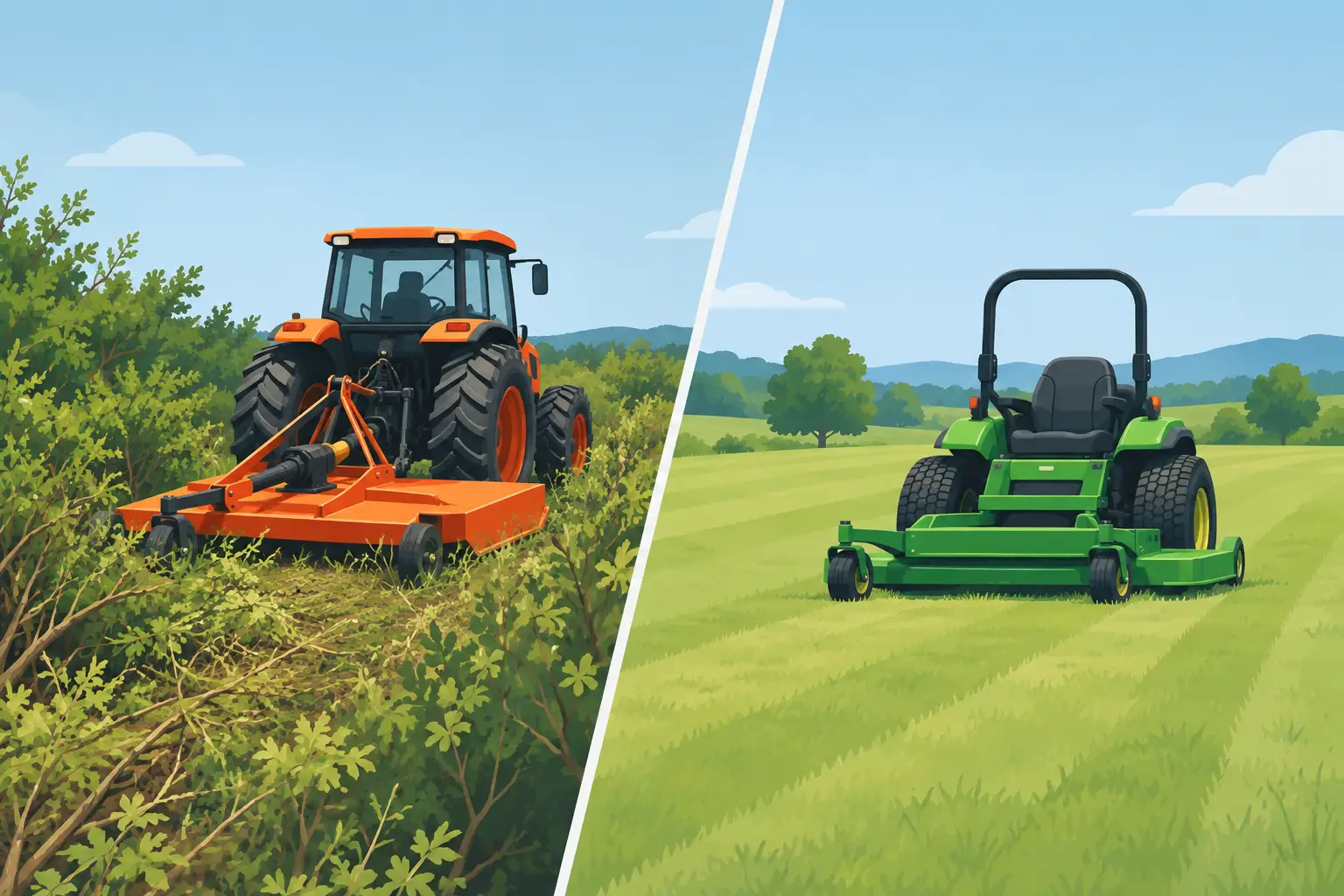
Mowing is designed for regularly maintained grass. A finish mower, zero-turn mower, or lawn tractor creates an even cut on relatively smooth ground. It works well for yards, open fields with short grass, and properties where appearance matters as much as function. The grass is cut at a controlled height, and the finished result is clean and uniform.
Bush hogging uses a heavy-duty rotary cutter, often pulled behind a tractor. It is built for tall grass, thick weeds, saplings, briars, and rougher conditions that would overwhelm standard mowing equipment. The goal is not a manicured lawn. The goal is to knock down overgrowth, restore access, improve visibility, and bring neglected land back under control.
The terms are sometimes used interchangeably, especially when someone simply wants a field cut. In practice, the equipment and finished results are different. Bush hogging handles harder growth and uneven ground. Mowing provides the cleaner finish when the ground and vegetation are already under control.
When Bush Hogging Is the Better Choice
Bush hogging is usually the right first step when a property has been left alone for a season or longer. Tall Johnson grass, ragweed, horseweed, brush, volunteer saplings, and blackberry briars can quickly take over open ground in central and eastern Oklahoma. Running a residential mower into that material can damage blades, belts, spindles, tires, and the mower deck. It can also leave the operator unable to see rocks, stumps, wire, holes, or discarded debris.
A tractor-mounted rotary cutter has the weight, ground clearance, and cutting capacity to work through that type of growth. It can be a practical option for pasture reclamation, fence-line access, hunting land, lot cleanup, and future building areas. Cutting the vegetation down also improves sight lines around driveways, ponds, barns, gates, and structures.
Bush hogging is especially useful when the land does not need to look like a lawn. A pasture may need grass and weeds cut back for better access or grazing management. A vacant lot may need growth controlled before a survey, inspection, or construction project. A wooded edge may need brush reduced so a fence can be repaired. In each case, function comes before a fine finish.
That said, a rotary cutter is not a cure for every overgrown property. Dense woody brush, larger trees, heavy cedar, and thick understory may call for forestry mulching or targeted land clearing instead. Trying to bush hog material beyond the cutter's capacity is hard on equipment and can create a safety issue. A good operator assesses stem size, slope, ground conditions, obstacles, and access before recommending a plan.
What Bush Hogging Leaves Behind
Bush hogging cuts and chops vegetation into smaller pieces that remain on the ground. That material helps cover bare soil and can reduce erosion, but it will not look like bagged lawn clippings. On a heavily overgrown field, the first pass may leave a rougher appearance simply because there is a lot of material to process.
A second pass or scheduled follow-up service can make a major difference once the cut material settles and new growth begins. For many acreage owners, this is the most cost-effective path: reclaim the land with bush hogging, then maintain it before brush and weeds become a bigger project again.
When Standard Mowing Makes More Sense
Mowing is the better fit for properties that receive regular care and need a finished appearance. Home lawns, maintained open lots, event spaces, and smooth areas around residences generally benefit from mowing rather than bush hogging. The equipment is made to cut grass evenly and leave a cleaner visual result.
Regular mowing also helps prevent a property from reaching the point where bush hogging is necessary. Keeping grass at a manageable height discourages some weeds from going to seed, makes hazards easier to spot, and keeps the property more welcoming. Around a home, it can also reduce places where snakes, ticks, rodents, and other unwanted pests may hide.
The catch is that mowing has limits. Even a commercial mower is not designed to chew through dense brush or cut unseen obstacles. If grass is several feet tall, if vines have wrapped around saplings, or if the area has unknown debris, starting with a standard mower is rarely the safe choice. It may take longer, cost more in equipment repairs, and still produce uneven results.
Terrain and Obstacles Matter as Much as Vegetation
Oklahoma properties often have more going on than tall grass. Drainage ditches, washouts, creek crossings, rock, old fence wire, hidden stumps, and steep banks all change how work should be performed. Wet ground can rut easily. Rocky ground can damage cutting equipment. Low branches and overhead lines can restrict tractor movement.
This is why the lowest price is not always the best value for land maintenance. The job should begin with a clear look at the site, including entry points for equipment, areas to avoid, fence lines, utilities, sensitive trees, and the result you expect. A responsible contractor does not treat every field as an empty rectangle.
For example, bush hogging a pasture may involve working around ponds, gates, livestock areas, and erosion-prone slopes. Clearing a future home site may require preserving selected trees and maintaining access for builders. A small residential acreage may need careful work near septic components, sheds, landscaping, and neighboring fences. The right method is shaped by the property, not just the acreage number.
Choosing Based on Your End Goal
The most useful way to decide between bush hogging and mowing is to start with what happens after the cut.
If you want a presentable lawn or regularly maintained open space, mowing is usually the right ongoing service. If you need to reclaim an overgrown field, reach a fence line, open a trail, reduce fire-prone vegetation, or prepare land for the next phase of work, bush hogging is often the better starting point.
If the property is covered in trees, woody brush, or tangled understory, neither option may be enough on its own. Forestry mulching can process brush and small trees into mulch without the burn piles and hauling often associated with traditional clearing. After the heavier vegetation is addressed, bush hogging can help maintain the open areas.
The best plan may combine services over time. A newly cleared tract can be bush hogged a few times a year to keep regrowth down. A reclaimed pasture may later shift to regular mowing in areas near the house, barn, or entrance. There is no benefit in paying for a lawn-quality finish where a practical field cut is all the land needs.
Safety Should Drive the Decision
Tall vegetation hides hazards, and rotating equipment can throw rocks, wire, branches, and debris. Operators need adequate clearance from homes, vehicles, livestock, people, and roadways. They also need to know where utilities, culverts, irrigation lines, and other vulnerable features are located before work begins.
Fire conditions deserve attention as well. During dry Oklahoma weather, equipment maintenance, hot components, and contact with dry vegetation require care. A site-conscious crew watches conditions, keeps equipment in good working order, and avoids treating safety as an afterthought.
At All Star Forestry Mulching, the recommendation starts with the condition of the land and the outcome the owner needs. That means clear communication about what the equipment can handle, what the finished area will look like, and whether follow-up maintenance will be worthwhile. A clear, itemized estimate helps prevent surprises and keeps the scope realistic.
A good cut should do more than make vegetation shorter. It should restore access, improve visibility, make future maintenance easier, and leave you with a property that works better for the way you live, build, graze, or manage it.