How to Clear Thorny Brush Without Damaging Land
A patch of thorny brush can turn a usable corner of a property into a no-go area fast. Blackberry, greenbrier, wild rose, locust, and similar growth catch clothing, hide holes and debris, block fence lines, and make routine mowing risky. Knowing how to clear thorny brush starts with matching the method to the size of the area, the type of growth, and what you need the land to do afterward.
For a few small clumps, hand work may be practical. For overgrown acreage, pasture edges, building sites, or brush tangled around mature trees, a planned equipment approach is usually safer, faster, and easier on the property. The goal is not simply to make the brush disappear for a week. It is to restore access while limiting soil disturbance and setting up a maintenance plan that keeps the problem from returning.
Start With a Safe Property Assessment
Walk the area before cutting anything. Thorny brush often covers more than vegetation. Old wire, broken posts, scrap metal, stumps, rock piles, drainage ditches, and abandoned equipment can be hidden underneath. Those hazards can injure someone with a handheld tool or cause expensive damage to mowing and clearing equipment.
Mark features you want to preserve, including healthy shade trees, planted shrubs, utility pedestals, septic components, fence corners, culverts, and creek or pond edges. If you are not certain where utilities run, confirm their locations before equipment enters the area. A dense thicket is not a reason to guess.
Also look at the terrain. Brush growing on level, dry ground is a different job from brush on a steep bank, wet draw, or erosion-prone soil. Aggressive root removal may be appropriate for a future driveway or building pad, but it can create runoff problems on a slope. In many cases, keeping the soil and root structure largely intact is the better long-term choice.
Choose the Right Way to Clear Thorny Brush
The right tool depends on brush height, stem diameter, density, and future use of the land. There is no one method that fits every Oklahoma property.
Hand loppers, a pruning saw, and a brush cutter can handle isolated patches near gardens, fences, or structures where larger equipment cannot work safely. Cut in sections rather than trying to pull a whole thorny vine at once. Wear leather gloves, eye protection, long sleeves, durable pants, and boots with solid ankle support. Thorny vines can spring back when cut, and dry canes can leave deep scratches.
A bush hog is often a good fit for lighter brush and recurring maintenance. It can knock down annual growth and smaller woody stems across open ground, especially where the goal is to maintain pasture access or keep a field from closing in. But a bush hog is not designed to solve every dense thicket. Heavy vines, larger saplings, hidden debris, and thick brush can wrap, jam, or damage equipment.
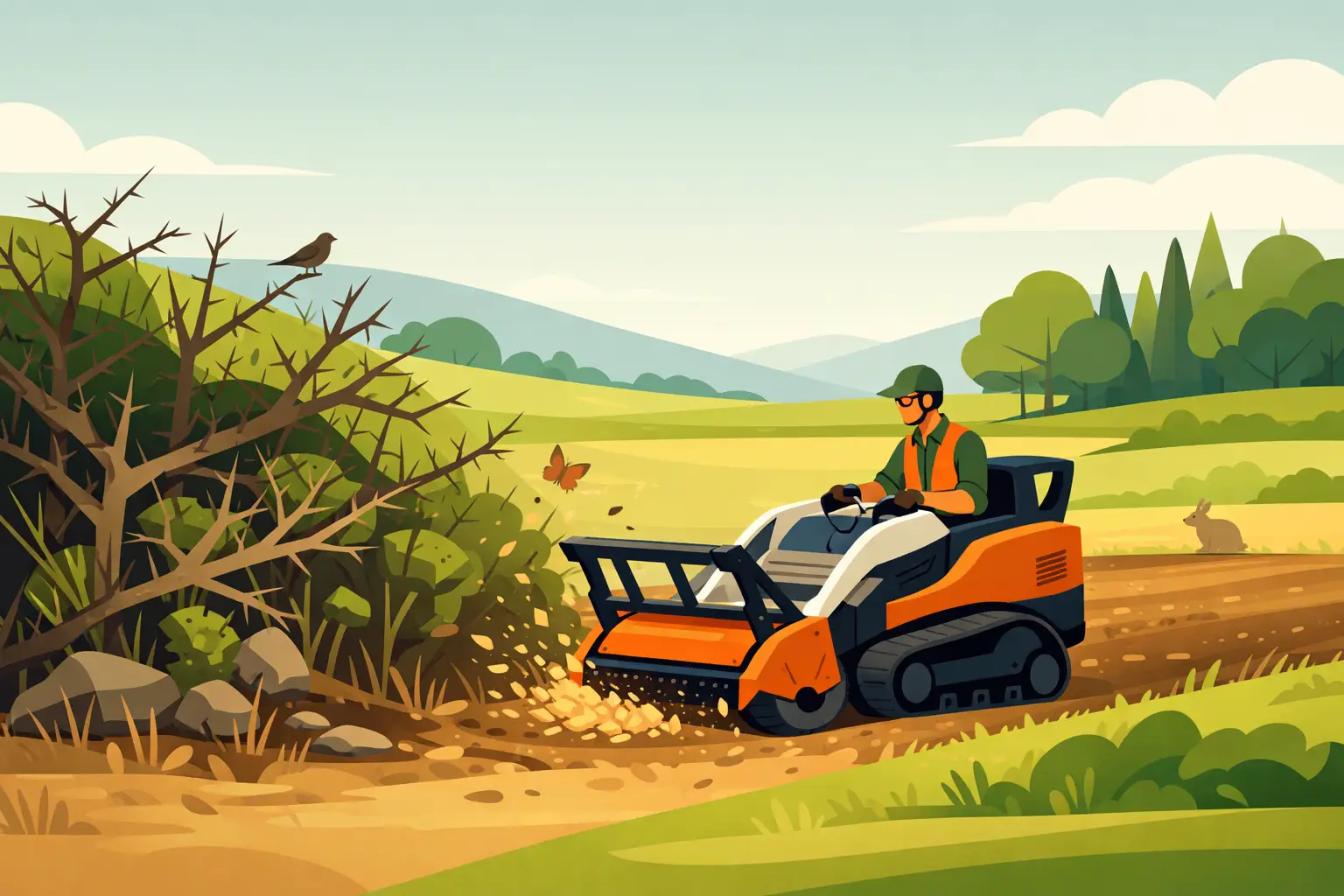
For substantial overgrowth, forestry mulching is often the cleaner option. A mulching machine processes brush and small trees into a layer of wood fiber across the ground instead of leaving large piles to haul, burn, or bury. That mulch can help cushion the soil from rain impact and reduce immediate bare-ground erosion. It also leaves the area easier to inspect and maintain.
Mulching does have limits. It does not automatically eliminate roots or stop every species from resprouting. Thick hardwood stumps, invasive plants, and mature thorny brush may need follow-up mowing, selective treatment, or repeat clearing. If your goal is a level construction site, pond excavation, or a deeply graded roadbed, additional site work may be necessary after vegetation is removed.
Clear in a Controlled Sequence
A dependable clearing job begins at the edge, not by driving straight into the middle of the heaviest growth. Opening a clear work lane gives the operator room to see hazards, manage brush direction, and keep an exit path available. It also reduces the chance of pushing thorny material into a fence, structure, or desirable tree.
Start by removing loose debris and cutting back brush around obvious obstacles. Then work from the perimeter inward in manageable passes. When clearing around mature trees, avoid scraping trunks or repeatedly driving over exposed roots. Leave a buffer where needed and remove competing brush carefully rather than treating every inch of ground the same.
Pay attention to fence lines. Thorny brush commonly grows through woven wire, barbed wire, gates, and corners. Pulling it out with force can stretch or break a fence that was still serviceable. In some situations, carefully cutting and mulching around the fence is more economical than replacing an entire run of wire afterward.
Do not overlook the material left behind. Piles of cut brush can harbor pests, obstruct drainage, and become a fire concern when left against structures or along access routes. Mulching, chipping, hauling, or placing debris in a designated burn area may all be options, depending on the property and local conditions. Open burning requires caution, proper weather, adequate clearance, and compliance with local rules.
Protect Soil, Water, and Desirable Growth
A cleared property should be more useful when the job is done, not rutted, washed out, or stripped of every beneficial plant. Avoid clearing when soils are saturated enough for equipment to leave deep tracks. Compacted or rutted ground can hold water poorly, create rough mowing conditions, and add cost to the next phase of the project.
Near creeks, ponds, and drainage channels, preserve stable vegetation where it is needed to hold banks in place. Focus on opening access and removing problem growth without turning a drainage area into bare dirt. If brush is growing close to a pond dam, driveway ditch, or culvert, the clearing plan should account for visibility, drainage, and future maintenance access.
Not every volunteer tree needs to go. A healthy oak, pecan, or shade tree may add long-term value to a homesite or pasture, while thorny undergrowth around its base provides little benefit. Selective clearing gives you a usable view and safer access without making the property feel exposed.
Plan for Regrowth Before It Starts
Thorny brush is persistent because it grows where the land has been left unmanaged. Cutting it back is the first win. Keeping sunlight, moisture, and open ground from turning into another thicket is the work that protects that investment.
After clearing, inspect the area during the next growing season. New shoots are much easier to mow or treat when they are short than after they have formed dense, woody canes. Open areas may need regular bush hogging, while pasture may benefit from a grazing and mowing schedule that prevents brush from gaining a foothold. Around driveways, fence lines, and structures, a planned maintenance visit can prevent small problems from becoming a full clearing project again.
If thorny growth includes a particularly aggressive invasive species, ask about the appropriate follow-up control plan. Mechanical clearing is often the right first step, but certain plants respond best when cutting is paired with a carefully selected treatment at the correct time of year. The approach should protect nearby desirable vegetation and follow label directions.
When It Makes Sense to Bring in a Clearing Contractor
Professional help is worth considering when brush covers several acres, hides hazards, includes trees too large for light mowing equipment, or sits near fences, homes, utilities, waterways, or steep terrain. It is also the practical choice when you need results on a schedule for a pasture, driveway, build site, or property sale.
A good contractor should assess the site in person, discuss what stays and what goes, explain the equipment approach, and provide a clear, itemized estimate. Ask how they handle debris, protect selected trees, address access limitations, and plan for wet ground or hidden obstacles. Clear answers upfront prevent surprise scope changes later.
At All Star Forestry Mulching, the work plan is built around the condition of the land and the outcome you need, whether that means reopening a fence line, reclaiming pasture, improving fire access, or preparing a site for the next project. Safe equipment operation, a defined scope, and a final walkthrough matter just as much as getting the brush cut down.
A thorny patch rarely gets easier by waiting. Walk the property, identify the hazards and the land features worth protecting, then choose a clearing method that leaves you with safe access and a realistic plan to keep it that way.