Mulching Erosion Prevention for Oklahoma Land
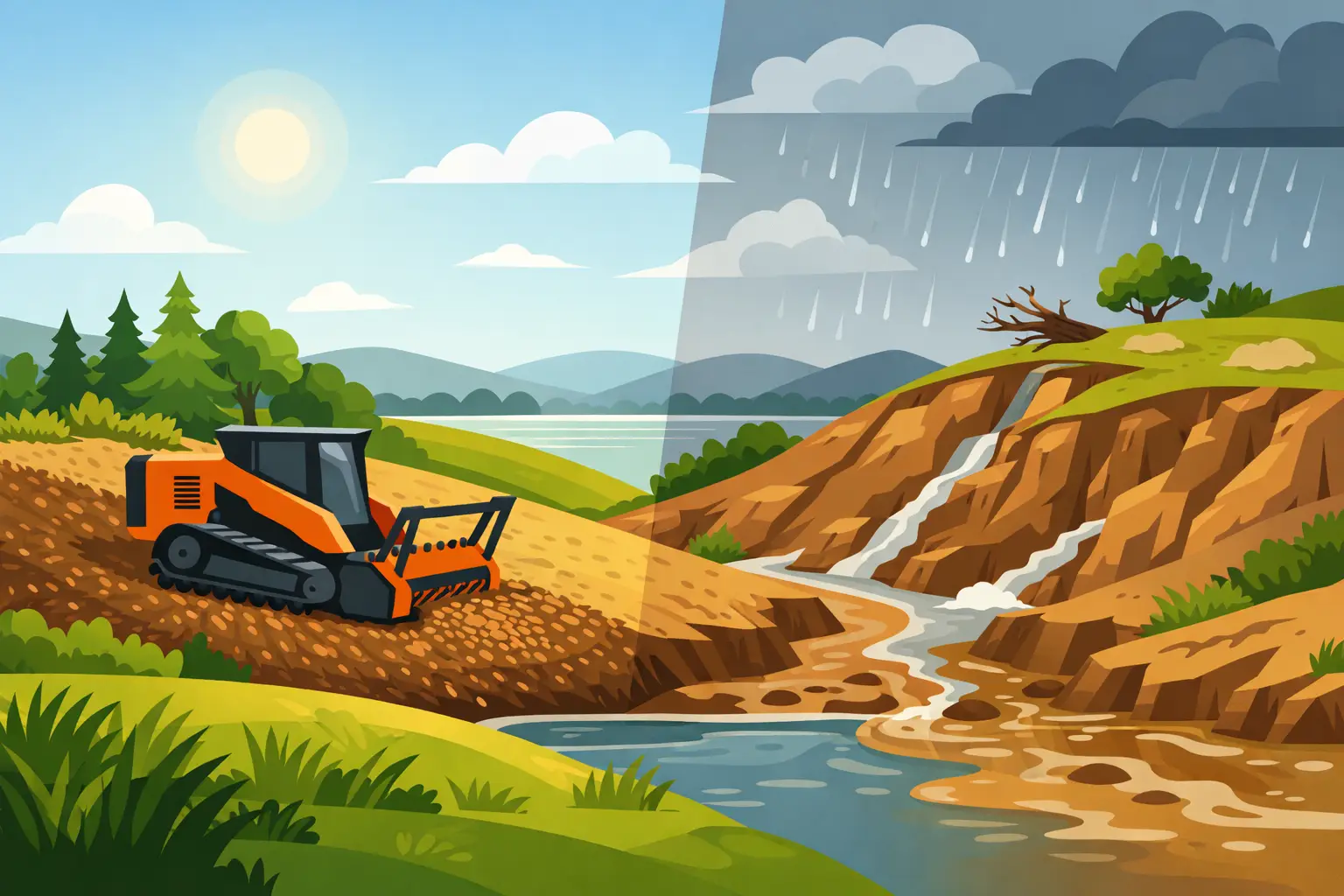
A freshly cleared property can look like a major improvement by the end of the day. But if bare dirt is left exposed before the next Oklahoma downpour, that progress can wash downhill fast. Mulching erosion prevention helps hold soil in place, soften the force of rainfall, and protect the usable ground you worked hard to reclaim.
For rural acreage, homesites, pasture edges, trails, and development lots, erosion control is not an afterthought. It affects access, drainage, fence lines, creek banks, driveways, and the long-term condition of your land. The right mulch layer can be one of the most practical tools available, especially when it is paired with a clearing plan that respects the slope, soil, and water flow already on the property.
Why bare ground loses soil so quickly
Oklahoma weather can change a site in a hurry. A hard rain does not simply fall onto exposed soil. Each drop strikes the ground with force, breaks loose fine particles, and starts carrying them toward low spots, drainage ditches, ponds, or neighboring property. On a slope, that runoff gathers speed and can cut small channels that grow deeper with every storm.
Clearing brush, mowing tall vegetation, removing storm-damaged growth, or preparing a building site can expose ground that was previously protected by leaves, roots, grass, and brush. That work may still be necessary for safety and access, but it changes how rain moves across the property. The goal is not to avoid improving the land. The goal is to avoid leaving it unprotected when the work is complete.
Soil type matters, too. Many Oklahoma properties have clay-heavy ground that sheds water when compacted or dry. Sandy soils can absorb water faster, but they may also lose particles more easily once runoff starts. A site with shallow slopes may only need a light, even mulch cover. A steep bank, a freshly graded driveway, or a drainage path may need mulch along with shaping, seeding, or other controls.
How mulching erosion prevention works
Mulch creates a protective layer between rain and soil. In forestry mulching, trees, brush, and small vegetation are processed into wood mulch and spread across the ground as the equipment works. Rather than hauling every bit of organic material away, the material can remain on the property where it provides useful coverage.
That layer slows rainfall before it hits the dirt. It also helps slow surface runoff, allowing more water time to soak into the ground instead of racing downhill. As mulch decomposes, it adds organic material that can support healthier soil over time. On a cleared lot or wooded acreage, this can help the site settle into a more stable condition while desired grasses and plants begin to return.
Mulch also reduces temperature swings at the soil surface. That is helpful during hot, dry Oklahoma stretches, when bare ground can bake hard and become more likely to shed water during the next storm. Keeping the surface shaded and covered supports moisture retention without turning the property into an overgrown mess.
Forestry mulch is not a permanent answer for every erosion problem. It breaks down, shifts under heavy traffic, and may wash out if it is placed in the wrong location or applied too lightly. Its value comes from using it as part of a site-conscious plan, not treating it as a blanket fix.
Where mulch makes the biggest difference
Mulch is especially useful where vegetation has been cleared but the property still needs to remain stable and accessible. A few situations deserve careful attention.
Slopes and hill edges
Even a modest slope can move a surprising amount of soil during a heavy storm. A consistent mulch layer slows the water and reduces direct impact on the exposed surface. On longer or steeper slopes, the work may need to be performed in sections, with attention to natural drainage routes so runoff is not concentrated in one spot.
Trails, access paths, and fence lines
Newly opened access is often where landowners first see erosion problems. Equipment traffic can compact the ground, and water naturally follows the easiest path. Mulch can protect the shoulders and disturbed areas beside a trail, but it should not be used to hide a drainage problem. If a path is acting like a ditch, the grade and water direction need to be addressed first.
Creek-adjacent areas and drainage corridors
Brush removal near a creek, pond, culvert, or low-water crossing requires extra care. Leaving a protective cover of mulch can reduce sediment movement, but it should not block water flow or be pushed into a channel. These areas often call for a lighter touch, selective clearing, and a plan that keeps the bank supported by appropriate vegetation.
Build sites and freshly graded ground
Construction preparation can leave large sections of soil exposed at once. Mulch may help protect portions of the site that are not being actively worked, particularly around the edges of a homesite, along utility routes, or beside a newly cut drive. However, a contractor may need clean soil in specific areas for foundations, inspections, compaction, or drainage installation. The right approach depends on the construction schedule.
The right mulch coverage depends on the job
More mulch is not always better. A heavy layer may smother emerging grass, create uneven footing, or interfere with the next phase of site work. Too little coverage leaves bare patches where erosion can begin. The right depth and distribution depend on the material, the season, the slope, and what the land needs to do next.
Forestry mulch is often a strong fit for acreage because it can be created and spread on-site. That reduces hauling, avoids burn piles, and leaves a natural-looking finish that is easier to maintain than a field of piled debris. It is particularly useful when removing cedar, brush, saplings, and overgrowth from land that will remain rural or recreational.
There are trade-offs. Coarser wood material lasts longer but may take more time to break down. Finer mulch can settle into the soil faster but may not provide the same long-term surface protection. If the goal is to establish pasture or a lawn quickly, the mulch layer needs to be managed so seed has enough contact with soil and sunlight to grow.
Start with water flow, not just vegetation
The best erosion prevention plan begins before equipment enters the property. Walk the site after a rain if possible. Look for muddy ruts, standing water, exposed roots, washed-out gravel, sediment at the bottom of a slope, and places where grass has failed to establish. Those are clues that water is already causing trouble.
A responsible work plan identifies what should be cleared, what should remain, and where runoff needs room to travel. Mature trees, established grass, and stable vegetation often provide more value than property owners realize. Clearing every plant to the dirt may create an open appearance, but it can also remove the natural systems that were holding the site together.
This is why selective forestry mulching can be a practical alternative to aggressive land disturbance. It can remove unwanted brush and improve access while retaining beneficial trees and keeping processed material on the soil surface. For many Oklahoma properties, that balance gives the owner a cleaner, more usable result without creating unnecessary erosion risk.
Avoid these common mistakes after clearing
The most expensive erosion problems often begin with a few preventable decisions. First, do not push brush and mulch into a drainage ditch, creek bed, culvert, or low spot just to make the site look clean. That debris can restrict flow and send water somewhere more damaging.
Second, do not assume exposed dirt will stay put until you are ready for the next project phase. If grading, seeding, driveway work, or construction is weeks away, protect the disturbed ground now. A single major storm can create repairs that cost more than taking basic precautions during the original job.
Third, avoid repeated traffic over wet ground. Even a well-mulched area can rut when heavy equipment or trucks travel across saturated soil. Use designated travel paths and schedule work with weather conditions in mind whenever possible.
Finally, inspect the property after significant rainfall. Small washouts are much easier to correct before they become deep channels, damaged access roads, or sediment problems near a pond or drainage area.
Make mulch part of long-term land care
Mulching is most effective when it supports the next step for the property. That may mean allowing native cover to recover, planting grass, maintaining a firebreak, improving pasture access, or keeping a homesite clean until construction begins. The plan should match how you intend to use the land, not just how you want it to look this week.
At All Star Forestry Mulching, that means looking at the whole work area before clearing begins: the access points, the slope, the drainage, the brush density, and the condition you want when the job is finished. A clear, itemized scope helps make sure mulch is used where it adds protection and not where it creates a future problem.
Before clearing your next overgrown section, consider where the water will go when the ground is open. Protecting that soil with the right mulch coverage can keep your property cleaner, safer, and easier to use long after the equipment has left.