Does Bush Hogging Remove Saplings? What to Expect
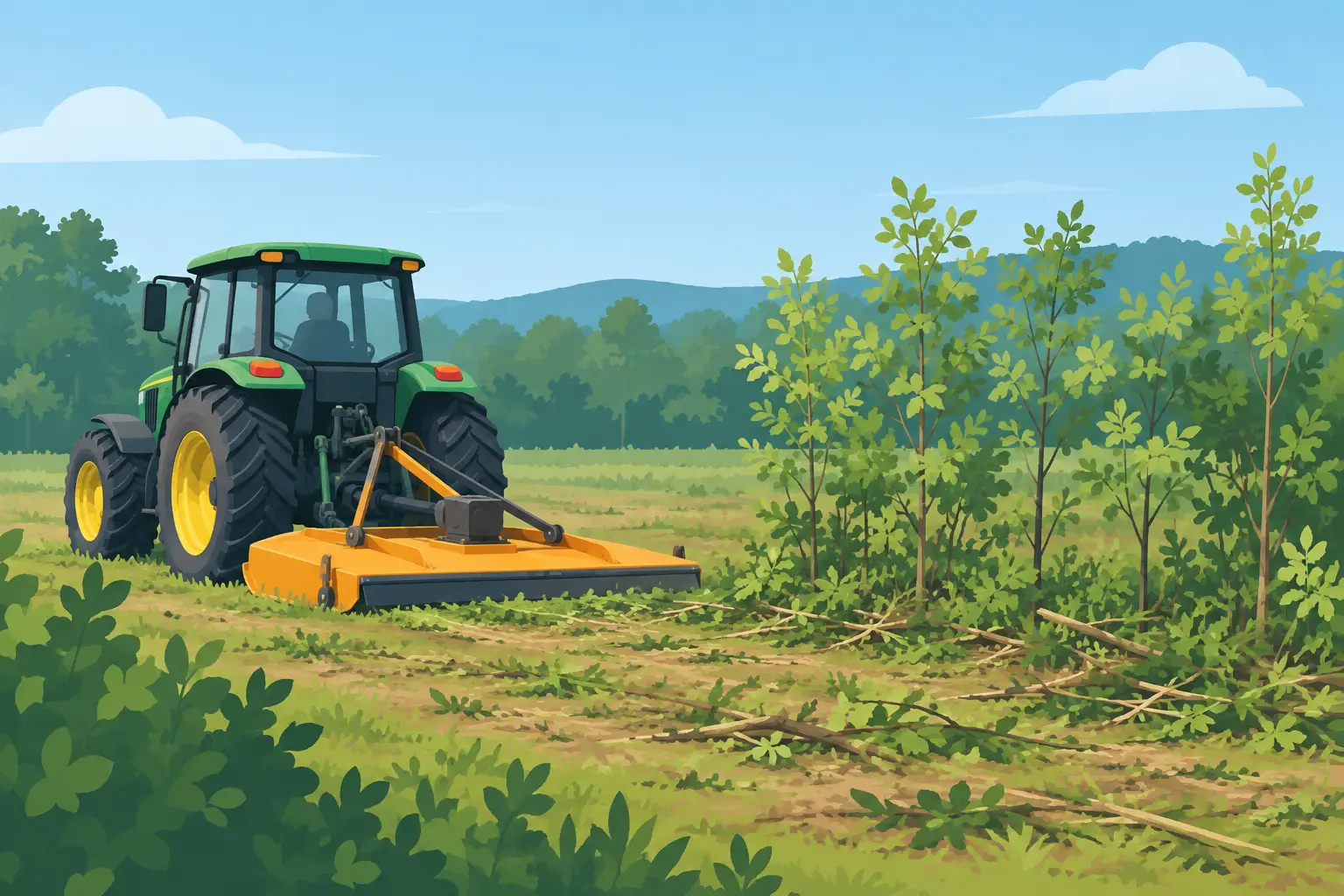
A brush hog can make an overgrown field look dramatically different in a single day. Tall weeds are down, trails reopen, and small woody growth no longer blocks the view. But does bush hogging remove saplings for good? Usually, it removes the top growth, not the root system. That distinction matters when you are trying to reclaim pasture, maintain acreage, prepare a homesite, or reduce fire hazards around Oklahoma property.
For the right job, bush hogging is efficient and cost-effective. For the wrong job, it can leave a property looking clean at first, only for the same saplings to return thicker the following growing season. A good land-management plan starts with an honest look at the size, species, density, and location of the growth.
Does Bush Hogging Remove Saplings Permanently?
Bush hogging can cut down many small saplings, especially young, flexible stems growing in open ground. A properly sized rotary cutter can handle grass, weeds, briars, light brush, and small volunteer trees within the equipment's rated cutting capacity. It is often an excellent maintenance method for fields and pastures that have started to grow up.
What it generally does not do is remove the stump or root. Most woody species respond to being cut by sending up new shoots from the remaining stem or root crown. In central Oklahoma, that can include eastern redcedar, elm, hackberry, locust, mulberry, and other volunteer trees. Some species are more persistent than others, but many will attempt to regrow after mowing.
That means bush hogging is best understood as a cutting and maintenance service, not full tree removal. It suppresses saplings and keeps an area usable. Repeated mowing may weaken some young plants over time, particularly when they are cut before they can establish strong reserves. Still, repeated mowing is not a guarantee that every sapling will die.
What Size Saplings Can a Bush Hog Cut?
The answer depends on the mower, tractor horsepower, blade condition, and the type of wood being cut. Every rotary cutter has a manufacturer-rated capacity, and working beyond it is hard on equipment and unsafe for the operator. Soft, green stems and dry, brittle stems do not cut the same way. Neither do straight saplings and low, multi-stem brush.
As a practical rule, bush hogging is better for light woody growth than for established trees. Saplings under an inch or two in diameter may be manageable with suitable commercial equipment, but dense brush or larger stems can quickly change the scope of the work. A sapling that is technically within a mower's capacity may still be a poor candidate if it is leaning, hidden in tall grass, growing near fencing, or mixed with rocks and debris.
A site assessment is the safest way to make that call. Before any mowing begins, the operator should identify wire, discarded metal, stumps, drainage structures, utility markers, large rocks, and uneven ground. Those hidden obstacles can damage equipment or create dangerous thrown-object risks.
Height Is Not the Same as Diameter
A six-foot sapling may have a narrow, easy-to-cut stem. A three-foot-tall stump sprout can have a thick woody base that will not respond well to a rotary cutter. Growth habit matters as much as height.
Dense clusters also deserve special attention. When a neglected fence line or old pasture is covered with intertwined briars, brush, and volunteer trees, mowing the tops may improve appearance without addressing the woody material underneath. The result can be uneven cutting, exposed stubs, and quick regrowth.
When Bush Hogging Is the Right Choice
Bush hogging is a strong option when the main goal is to restore and maintain open ground. It works well for pasture upkeep, field edges, access lanes, hunting property, large yards, and lots where grass and weeds are the primary issue with scattered young saplings mixed in.
It is especially useful when the area has been maintained before and simply got ahead of the owner for a season or two. Cutting vegetation back on a regular schedule prevents many small trees from becoming larger, more expensive clearing problems. For ranch and acreage owners, that can protect usable grazing ground and make it easier to inspect fences, ponds, gates, and livestock.
Bush hogging may also be the right first step when you need visibility. Cutting back tall vegetation can reveal the true condition of a property before deciding where more targeted clearing is needed. Once the brush is down, it is easier to identify mature trees worth preserving, old debris piles, drainage paths, washouts, and heavy pockets of woody growth.
The trade-off is simple: mowing delivers a cleaner surface and better access, but it may require ongoing maintenance. If the landowner expects to mow the area once and never see woody regrowth again, a different approach may be more appropriate.
When Forestry Mulching or Clearing Makes More Sense
Forestry mulching is often the better fit when saplings are too large, too dense, or too established for productive mowing. A forestry mulcher can process brush and many trees at ground level, leaving mulch spread across the work area rather than piles that must be hauled or burned. It is particularly useful for reclaiming overgrown acreage, opening trails, improving sightlines, and reducing the fuel load in brush-heavy areas.
Unlike bush hogging, forestry mulching can handle substantial woody material and eliminate the standing stems that make a field difficult to use. It does not automatically remove every root system either, so some species may still resprout. However, it creates a much more thorough reset where brush has taken over.
Mechanical clearing, grubbing, or excavation may be necessary when the goal is complete root removal for a building pad, fence installation, roadway, pond work, or other construction. Those methods can be more disruptive to soil and usually involve more cleanup, but they have a place when permanent removal and grade preparation are the priority.
The best method depends on what the land needs next. A pasture needs a different finish than a future shop site. A wooded homesite may call for selective clearing that protects healthy shade trees, while a neglected lot may need debris removal and a clean, accessible work area before construction can begin.
Timing Affects Sapling Control
Timing will not turn a bush hog into a stump grinder, but it can affect how well repeated mowing controls regrowth. Cutting young woody plants before they mature and seed helps reduce future spread. Staying on a regular schedule also prevents small stems from becoming heavy brush that needs a more involved clearing method.
For many Oklahoma properties, the most practical plan is to mow before vegetation becomes too tall and woody, then return as needed based on rainfall, soil conditions, and the speed of seasonal growth. Wet years can produce aggressive regrowth. Drought-stressed land may appear manageable one season and then rebound quickly after a few good rains.
Avoid pushing equipment into saturated ground whenever possible. Rutting a pasture or tearing up a soft access road creates a new problem while solving the brush problem. A responsible operator considers ground conditions, slopes, nearby structures, livestock, and the final use of the property before selecting equipment.
A Practical Plan for Sapling-Covered Land
If your land has scattered saplings and tall grass, bush hogging may be all it needs. Plan on routine mowing to keep it open. If the area is covered with thick volunteer trees, mature brush, and briars, consider forestry mulching first, then use bush hogging as the long-term maintenance tool.
For a property being prepared for construction, start with the end goal. Mark trees to save, identify utilities and boundaries, and determine whether roots must be removed or whether a mulched finish will work. This prevents paying for a service that makes the land look better but does not prepare it for the next phase.
A clear, itemized estimate should explain the equipment approach, the expected finish, any debris concerns, and whether follow-up maintenance is likely. There should be no surprise fees and no vague promise that every sapling will disappear permanently when the job is actually surface mowing.
All Star Forestry Mulching helps property owners match the work to the land, whether that means straightforward bush hogging, selective forestry mulching, or a broader clearing plan. The right first pass can restore access quickly. The right maintenance plan keeps that access from disappearing again.