Does Forestry Mulching Leave Stumps? What to Expect
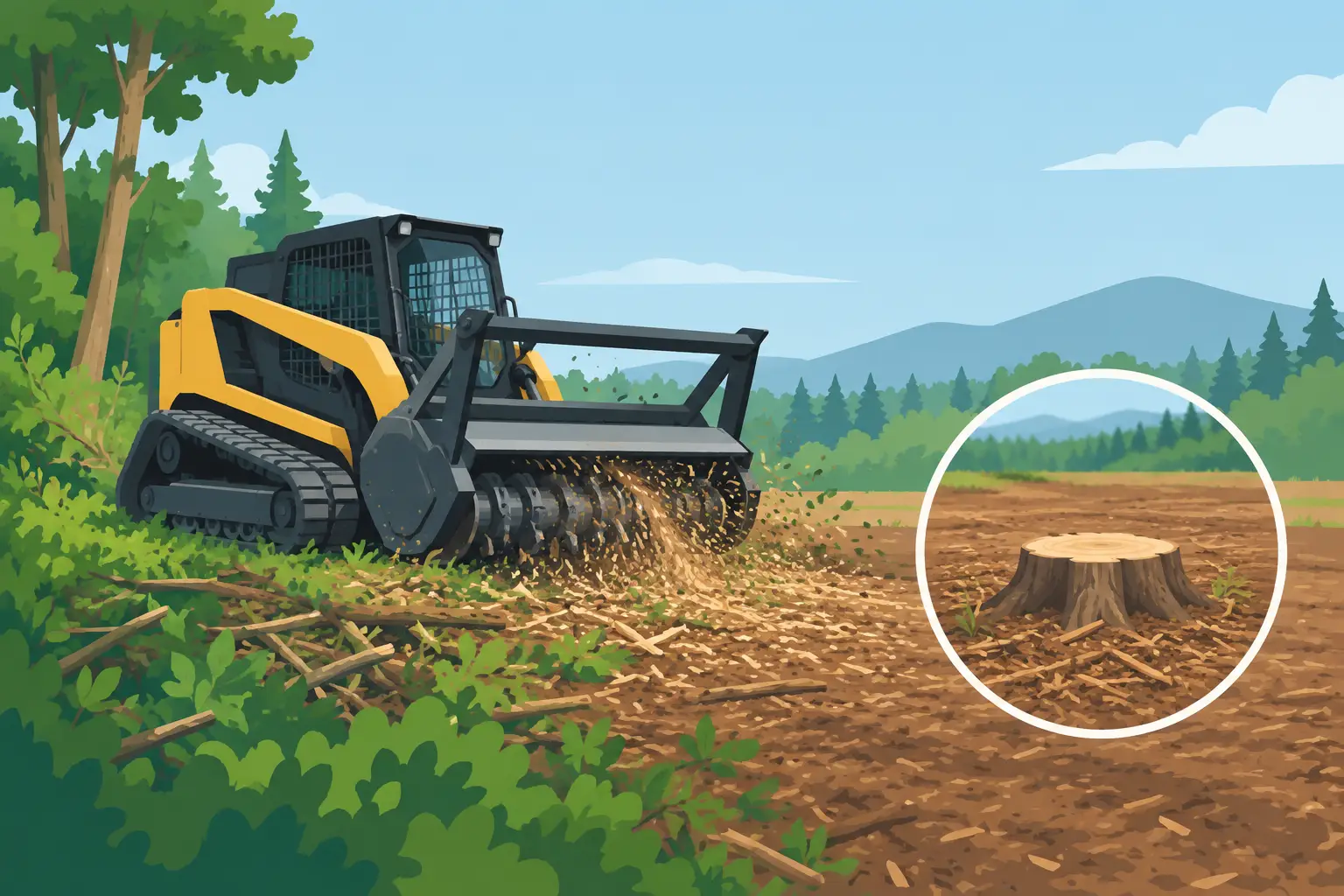
A property can look dramatically different after a forestry mulching job, but the ground-level details matter just as much as the view from the driveway. Does forestry mulching leave stumps? Often, yes - especially when larger trees are involved. But the size, height, and number of remaining stumps depend on the vegetation, terrain, equipment access, and the purpose of the clearing.
For many Oklahoma properties, leaving low stumps and intact root systems is exactly what makes forestry mulching a practical land-management option. For a future home pad, fence line, cultivated field, or road extension, stump removal may need to be part of the work plan. The right answer starts with how you intend to use the land once the brush is gone.
Does Forestry Mulching Leave Stumps?
Forestry mulching uses a heavy-duty machine with a rotating mulching head to process brush, cedars, saplings, vines, and many small trees into mulch. The machine can typically grind vegetation very close to ground level, leaving a layer of chipped organic material across the work area.
That does not mean every stump and root disappears. A forestry mulcher is designed to process above-ground vegetation efficiently. It is not an excavator, stump grinder, or root-raking machine. When a tree is too large, too hard, positioned in a difficult spot, or unsuitable for grinding below grade, a stump may remain.
In practical terms, small brush and young trees can often be mulched down with little or no noticeable stump left behind. Larger hardwoods, mature trees, and trees with wide root flares are more likely to leave a low stump. The goal is usually to leave it as low and manageable as site conditions safely allow, without tearing up the soil or damaging the equipment on hidden rock, wire, or debris.
Why Low Stumps Can Be the Better Result
Many landowners hear “stumps remain” and assume the work is incomplete. That is not always the case. Removing every root ball can turn a selective clearing project into a much more disruptive excavation job.
Forestry mulching leaves the root system in place. Those roots help hold soil together, particularly on slopes, drainage areas, creek approaches, and ground that can soften after Oklahoma rain. The mulch layer also helps reduce erosion, retain moisture, and slow the return of light brush growth.
By comparison, pushing trees over and digging out stumps can leave holes, exposed soil, piles of roots, and significant cleanup needs. That approach has its place, but it is not automatically the best approach for every overgrown acreage, pasture edge, hunting property, or residential lot.
A low stump is usually a reasonable trade-off when the objective is to restore access, improve visibility, reclaim a fence line, reduce cedar and brush pressure, or make a property easier to maintain with a tractor or mower. The property becomes usable faster, with less soil disturbance and less debris to haul away.
When Stumps Need to Be Removed
Stump removal becomes more important when the finished area needs to be smooth, graded, and ready for a specific use. A forestry mulching plan should be built around that end use before equipment arrives.
Building and grading projects
If you are preparing a home site, shop pad, driveway base, septic area, or other construction zone, remaining stumps and roots can interfere with excavation and grading. In those locations, trees may need to be cut, removed, and stumped separately before final dirt work begins. Mulching may still be valuable for clearing the surrounding brush and reducing disposal costs, but it is not a substitute for site-specific excavation.
New fields and improved pasture
A pasture that will continue to be bush hogged can often function well with low, clearly identified stumps outside the primary mowing path. A field intended for tillage, hay production, or smooth finish mowing is a different situation. Stumps and heavy roots can damage implements, create uneven ground, and make repeated field work frustrating.
Fence lines and utility access
For a new fence line, stumps can interfere with post placement and make it harder to keep a clean working corridor. Along utilities or access roads, the concern is usually clearance for trucks, trailers, and maintenance equipment. The best approach may be to mulch the brush broadly, then remove selected stumps only where posts, gates, traffic, or drainage require a clear path.
Safety-sensitive areas
Stumps near driveways, trails, work areas, or frequently mowed yards can become a trip hazard or equipment hazard. They deserve extra attention, particularly where children, guests, livestock, ATVs, tractors, and service vehicles will be moving around. A good operator will walk the area, identify those high-use zones, and set clear expectations about the finished surface.
What Determines Whether a Stump Will Remain?
There is no honest one-size-fits-all promise. Several field conditions affect the result:
- Tree species and diameter - small cedars and brush behave very differently than mature oak, elm, or hardwood trees.
- Root flare and stump shape - trees that widen sharply at the base may leave more material near the ground.
- Ground conditions - steep slopes, soft ground, hidden rock, and wet areas can limit how aggressively equipment should work.
- Obstacles - wire, old fencing, metal, concrete, and buried debris can damage a mulching head and must be handled carefully.
- Site purpose - a recreational trail, pasture, build site, and backyard each call for a different finish.
The same tree can require a different approach depending on where it stands. A low stump in the middle of a wooded edge may be acceptable. That same stump at the entrance to a planned driveway may need to come out.
Forestry Mulching Versus Stump Grinding
Forestry mulching and stump grinding solve related but different problems. Mulching is built for clearing a wide area of unwanted vegetation and turning it into an on-site ground cover. It is efficient for dense cedars, brush thickets, invasive growth, and overgrown property lines.
Stump grinding focuses on one stump at a time. It can grind a selected stump below grade, but it creates a pile of chips and does not address the broader brush problem. Excavation removes the stump and much of the root mass, but it can leave a hole that must be backfilled and compacted.
On some properties, the best solution combines methods. Forestry mulching handles the bulk of the clearing, then selected stumps are ground or excavated where the future use demands it. That approach keeps the project focused and helps avoid paying for unnecessary disturbance across the entire property.
How to Plan for the Finish You Actually Need
Before requesting an estimate, think beyond “I need this cleared.” Mark or describe the areas where smooth access is nonnegotiable: planned building pads, driveway routes, gate openings, fence lines, lawn areas, utility paths, and locations where tractors will routinely operate.
Also identify what should stay. Mature shade trees, desirable hardwoods, drainage swales, pond edges, and habitat areas may need a lighter touch. Clearing does not have to mean stripping the property bare. A thoughtful work plan can open up access and improve safety while preserving the trees and features that give the land value.
At All Star Forestry Mulching, the practical question is not simply whether a stump can be cut lower. It is whether the completed work will serve the property owner safely and hold up to the way the land will be used. That means discussing access, vegetation size, soil conditions, obstacles, and the intended finish before work starts - with a clear, itemized scope and no surprise assumptions.
A Low Stump Is Not the Same as a Problem
Forestry mulching can leave stumps, but it often leaves them low enough that they are not a concern for the intended use. The key is matching the method to the project instead of expecting one machine to perform every kind of land clearing.
If your land needs a smooth construction-ready surface, say so at the start. If you need safer access, a cleaner pasture edge, fewer cedars, and manageable ground without major soil disruption, forestry mulching may be the right fit. A walk-through before the job is the best time to point out every place where a stump cannot stay - and every place where protecting the ground matters more than removing one.