8 Top Signs Land Needs Clearing on Your Property
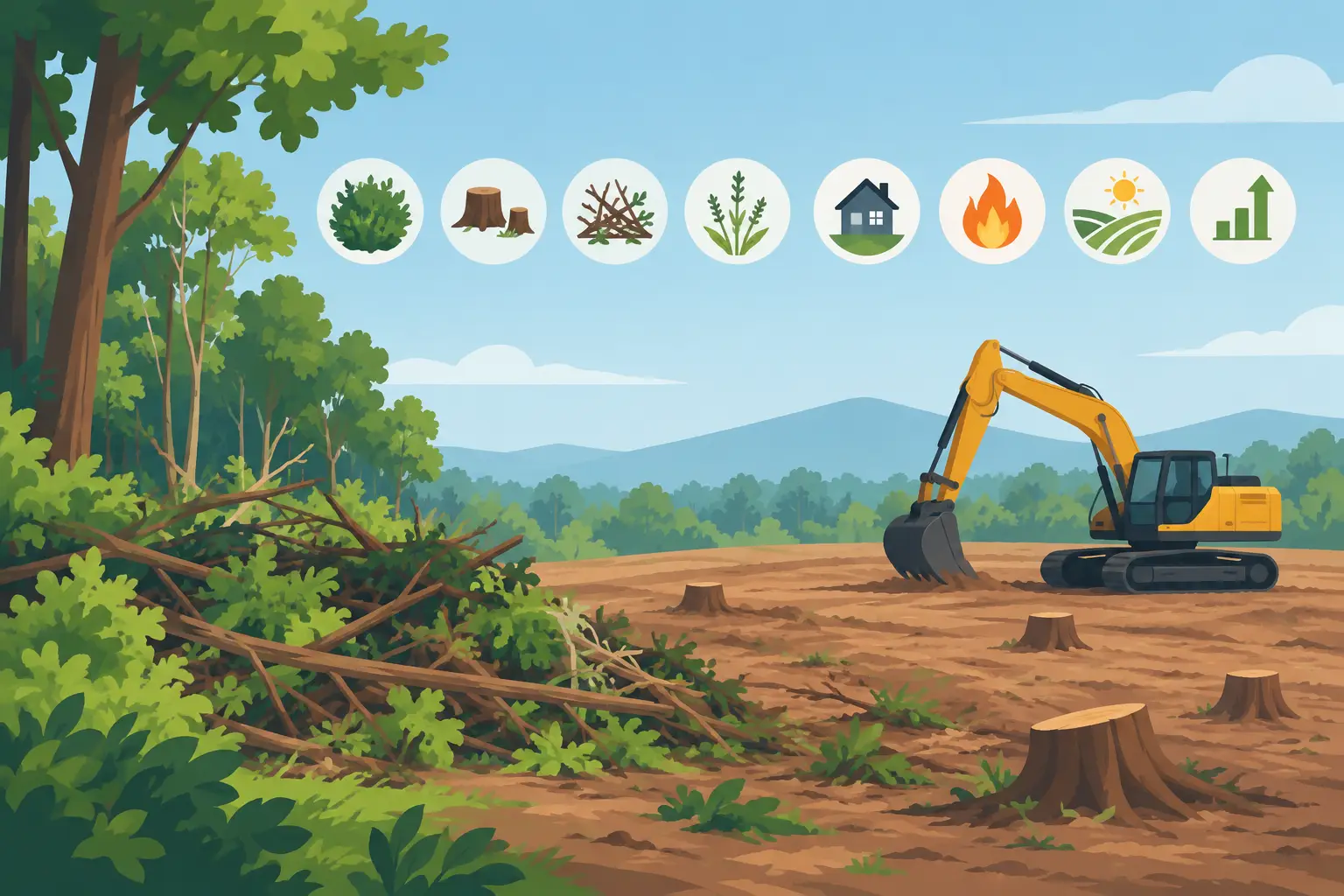
A gate you can barely open, a driveway closing in with saplings, or a pasture that disappears under waist-high weeds can turn usable acreage into a daily problem. The top signs that land needs clearing are not always dramatic at first. More often, they show up as lost access, growing maintenance costs, reduced safety, and a property that no longer works the way you need it to.
For Oklahoma property owners, timing matters. Clearing early can often keep a manageable brush problem from becoming a larger project involving mature trees, heavy debris, fence repair, or erosion concerns. The right approach depends on your goals, the terrain, the vegetation, and what you plan to do with the land afterward.
1. Access Roads, Trails, or Fence Lines Are Closing In
If brush is scraping your truck, hanging over a driveway, or making it difficult to reach a pasture, pond, or outbuilding, the land is telling you it needs attention. Overgrown access routes are more than an inconvenience. They slow down routine maintenance, make it harder for contractors and emergency vehicles to get through, and can hide washouts, holes, and fallen limbs.
Fence lines deserve the same attention. Small trees and thick brush can push against wire, conceal damaged posts, and make inspections nearly impossible. If you cannot easily walk or drive the perimeter of your property, clearing along key boundaries may be the practical first step.
You do not necessarily need to clear every inch of acreage. A targeted plan can restore roads, trails, utility routes, gates, and fence lines while leaving healthy shade trees and useful cover in place.
2. Brush Is Taking Over Open Ground
Pastures, homesites, and rural lots often change quickly when mowing gets delayed for a season or two. Native growth has its place, but dense brush, volunteer trees, thorny growth, and invasive plants can take over ground intended for grazing, recreation, building, or simple property access.
Look for areas where grass is losing the competition. When cedar, locust, briars, and woody saplings become the dominant growth, your open ground can become harder to reclaim each year. Young trees are generally easier to manage than established timber, and addressing them early can protect the usable footprint of your land.
For many properties, forestry mulching is a good fit because it processes brush and smaller trees at ground level and leaves a mulch layer behind. That mulch can help reduce exposed soil and give the site a cleaner, more manageable finish. It is not the answer to every project, though. Large stumps, major grading needs, buried debris, or a future foundation may call for additional clearing or earthwork methods.
3. Your Property Has a Growing Fire Risk
Dry grass, dead limbs, low-hanging branches, brush piles, and thick cedar growth can all increase the fuel load around a home, barn, shop, or access road. In Oklahoma's hot, dry periods, that buildup deserves serious attention.
Clearing for fire safety is not about making a property bare. It is about reducing hazardous vegetation where it can create trouble, especially around structures, driveways, equipment storage, and escape routes. Removing ladder fuels - vegetation that can carry fire from ground level into shrubs or tree canopies - is often part of a thoughtful plan.
A cleared, maintained route can also improve access for first responders if an emergency occurs. As a firefighter-led local contractor, All Star Forestry Mulching approaches hazard reduction with that practical reality in mind: safe equipment operation, clear access, and a plan that fits the property rather than a one-size-fits-all clearing job.
4. You Cannot See What Is Happening on Your Land
When vegetation gets thick enough to hide fallen trees, abandoned fencing, dumped material, washouts, or animal activity, regular property oversight becomes difficult. This is especially common on acreage that is not visited every day, vacant lots, inherited land, and properties being held for future development.
Limited visibility can create expensive surprises. A downed tree may block drainage. A concealed pile of old wire can damage equipment. Encroaching growth may extend across a boundary before anyone notices. Clearing selected areas gives you a better view of the ground and makes ongoing maintenance more realistic.
This does not mean every wooded area needs to be opened up. Woods can provide privacy, wind protection, wildlife habitat, and shade. The goal is to regain visibility where it serves a purpose, such as near structures, along boundaries, around ponds, and beside roads.
5. You Are Planning to Build, Install, or Improve
A new home, barndominium, shop, driveway, pond project, fence, utility line, or livestock area all require room to work. If brush and trees cover the proposed site, clearing is usually one of the first steps before construction can move forward.
Build-site clearing should be planned around more than the building pad. Consider how trucks will enter and turn around, where utilities will run, how drainage moves across the lot, and which trees are worth preserving. Clearing too broadly can remove shade and privacy you later wish you had kept. Clearing too narrowly can leave no working space for equipment or future access.
Before work begins, walk the site with clear priorities. Mark the areas to preserve, identify the intended driveway and structure locations, and discuss whether the finished ground needs to be mulched, mowed, graded, or prepared for another contractor. Clear, itemized estimates help keep that scope understandable and avoid surprise fees.
6. Routine Mowing Is No Longer Enough
Bush hogging is an effective maintenance tool for grass, weeds, and lighter overgrowth. But it has limits. Once woody growth becomes too thick, too tall, or too dense, repeated mowing may only cut around the problem instead of removing it.
A good rule of thumb is to assess what is actually growing. If the area is mostly seasonal grass and weeds, mowing may be the most cost-effective option. If it contains dense saplings, thorny brush, and trees that are steadily enlarging, land clearing may provide a more lasting reset.
The best results often come from pairing services. A property may need initial forestry mulching or targeted clearing, followed by bush hogging on a regular schedule. That approach can help keep regrowth from taking over and protect the investment you made in reclaiming the ground.
7. Water Is Not Draining the Way It Used To
Overgrowth can interfere with drainage in ways that are easy to miss. Brush may clog ditches, fallen limbs can block culverts, and unchecked vegetation can make it difficult to inspect low areas after a storm. Water pooling near a driveway, building, gate, or pasture entrance is a reason to look more closely.
Clearing alone does not fix every drainage problem. A site with erosion, failing culverts, poor grading, or standing water may need a broader solution. But removing vegetation and debris can reveal the real issue and restore access for the work needed next.
Be careful around creeks, ponds, drainage channels, and steep ground. These areas may require selective work to protect banks and avoid unnecessary soil disturbance. The fastest-looking solution is not always the right one for the long term.
8. The Property No Longer Matches How You Use It
Sometimes the clearest sign is simple: your land is no longer functional. Maybe the kids cannot reach the creek trail, livestock have less grazeable ground, you have stopped using a back pasture, or the lot you bought for a home is still inaccessible months later.
Land clearing should solve a practical problem. It can create room for a garden, restore a riding trail, improve a view, make a homesite usable, or bring neglected acreage back into a manageable condition. When the work is tied to a clear purpose, it is easier to choose the right scope and avoid paying for clearing that does not improve the property.
Start With a Walk-Through, Not a Guess
Before scheduling work, walk the property and make note of what you need to access, what you want to preserve, and what creates the biggest safety or maintenance concern. Take photos of problem areas, identify gates and utilities, and point out any old structures, wire, septic components, or hidden debris that equipment operators should know about.
A professional site assessment can then match the equipment and work plan to the actual conditions. Whether the answer is selective forestry mulching, bush hogging, brush removal, storm cleanup, or ongoing maintenance, the goal should be straightforward: safer access, cleaner usable ground, and work completed on time and on budget.
The best time to address overgrowth is usually before it cuts off access or turns a simple maintenance job into a major reclamation project. A clear plan now gives your land more room to work for you later.